Sad Songs Say So Much

Guess there are times when we all need to share a little pain // And ironin’ out the rough spot Is the hardest part when memories remain // And it’s times like these when we all need to hear the radio // ‘Cause from the lips of some old singer // We can share the troubles we already know// Turn ’em on, turn ’em on // Turn on those sad songs // When all hope is gone (ah…) // Why don’t you tune in and turn them on? // They reach into your room, oh // Just feel their gentle touch // when all hope is gone // Sad songs say so much

“Sad Songs” Elton John and Bernie Taupin, 1984

But….all hope is not gone. I want to talk about something that I believe is overlooked, misunderstood, and sorely needed, perhaps no more so than in the age of Covid-19. We are hurting; one in three people are reporting anxiety issues; many are angry and all of us uncertain. As one person reported, it’s like being on an endless car ride with a drunk at the wheel.

I want to talk about lament.

Lament. It’s more than just venting. Lament is prayer, a passionate expression of grief or sorrow and it is something too many of us, the church included, find difficult to do. We have this silly notion that we cannot bring such expressions of anger, the desire for sweet revenge, and despair into our conversations with God: that we must somehow rid ourselves of such imperfections before God will be interested in hearing from us. Or that worship must always be upbeat, nothing but praise and joy- no ‘Debby downers’ allowed. And oh, then there is the unspoken true American religion of optimism and denial. Big boys don’t cry, so suck it up buttercup and get along with life. In the futile idealism that doesn’t match up with reality, we flat out refuse to acknowledge the darkness and evil realities of life in a way that honestly demonstrates our dependency on the Lord until we are wearied beyond belief. We cannot honestly face our anger and grief: we deceive ourselves and the truth is not in us (1 John 1.8).

Lament is healthy and it is one of the most theologically sound practices you can undertake to express the pain, sorrow and grief caused by the suffering in your life. Lament allows you to hallow your anguish in prayer, both communally and privately. Lament is our divine invitation to talk to and with God, about our pain. We are blessed to have a God that weeps with us and in God’s own tears, works to heal and restore us – think Lazarus. Lament has an important purpose and that is trust. We know that our sovereign God has the power to deliver: the tomb is empty.

And here’s the beautiful thing. We have been handed a road map for lament from God for exactly that purpose: the Bible. The Bible is filled with these songs of sorrow: the book of Lamentations weeps over the destruction of Jerusalem; Job reminds us that there are more pains and unanswered questions in heaven and earth than we can grasp; Jesus lamented in the final hours of his life. And then we have the Psalms, likely the single best prayer guide ever printed.

Formulated as human speech, the psalms are God’s words put directly into our mouths to give back to God.  

The Hebrew title for the Psalter is Tehillîm – the Book of Praises, seemingly a contradiction as lament makes up the bulk of the book. That is a point worth pondering and praying on. Lament calls for opening yourself up to God with honest speech and when you do, you begin to break the logjam, allowing your tears to drench your bed and make way for the joy and praise that comes from experiencing God’s healing presence.

Lament: it is protest, it is petition, and it is praise. It is gift.

Protest. Turn to God. How long will you forget me, Lord? Forever? How long will you hide your face from me? How long will I be left to my own wits, agony filling my heart? Daily? How long will my enemy keep defeating me? (Psalm 13.1-2). Humbly and honestly, identify the pain, the anger, the questions, and frustrations welling up inside.

Petition. Knock and state your case. Wallowing in sorrow leads to despair or denial. To seek God’s help with your pain is an act of hope and faith in God’s promises. Look at me! Answer me, Lord my God! Restore sight to my eyes! Otherwise, I’ll sleep the sleep of death, and my enemy will say, “I won!” My foes will rejoice over my downfall (Psalm 13.3-4).

Praise: The heart of the act of trust that lament is and where all roads lead: But I have trusted in your faithful love. My heart will rejoice in your salvation.Yes, I will sing to the Lord because he has been good to me (Psalm 13.5-6). This is language that renews our faithful commitment to trust in God as we journey through a broken world.

Many folks have found themselves and their circumstances in these prayers, myself included. What I discovered was that I found myself through them: an understanding of who I am, what I need and most importantly, I discovered the language to say it all to God. One of my favorite Irish poets caught this well:

Whenever God shines his light on me // Opens up my eyes so I can see // When I look up in the darkest night // And I know everything’s going to be alright // In deep confusion, in great despair// When I reach out for him he is there // When I am lonely as I can be // And I know that God shines his light on me. “Whenever God Shines His Light,” Van Morrison, 1989.

The lament psalms – more than a third of the psalter – they are praise in a minor key – the sad songs that say so much.

Note: There are many more than the following, but I offer a few suggestions to get started: Psalm 6, 11, 12, 13, 22, 23, 39, 40, 44, 46, 54, 62, 73, 88, 102, 109, 121, 137, 143.

Christian Assumptions

Surely his salvation is at hand for those who fear him, that his glory may dwell in our land. Steadfast love and faithfulness will meet; righteousness and peace will kiss each other. Faithfulness will spring up from the ground, and righteousness will look down from the sky. The Lord will give what is good, and our land will yield its increase.

Psalm 85.9-12

We all know what assume means…the old saw about making an ass out of u and me. There are many times we experience the truth of that as it really means to act on something as if it were fact when indeed it isn’t. But the flip side may be equally true and one that does not have such embedded cynicism. Yes, there are times when we must assume that something is true and allow that assumption to guide our actions. As a Christian, I believe that the Bible provides us with many things on which we can make assumptions; good, healthy, life giving assumptions that shape our walk today and tomorrow.

Assume God is working in your life right now.

God has created a unique plan for each one of our lives. By the power of the Spirit, God works in a particular fashion in particular people for God’s particular purposes. Bless the God and Father of our Lord Jesus Christ! He has blessed us in Christ with every spiritual blessing that comes from heaven… God destined us to be his adopted children through Jesus Christ because of his love. This was according to his goodwill and plan and to honor his glorious grace that he has given to us freely through the Son whom he loves…We have also received an inheritance in Christ. We were destined by the plan of God, who accomplishes everything according to his design. Ephesians 1.3, 5-6, 11

Assume the Lord has great things in store for you.

All of creation is groaning and suffering labor pains and, as the bumper sticker says, ‘stinky tuff happens.’ But with the resurrection, a cosmic shockwave has occurred. Death has been the tyrant, but in Christ, something new has happened: the good news of the created order being restored and all of us along with it. We cannot fathom God’s time or timing, but it is never too early or too late: It is always the right time. Have patience because endurance produces character and character produces hope: Then he looked up at his disciples and said: “Blessed are you who are poor, for yours is the kingdom of God. “Blessed are you who are hungry now, for you will be filled. “Blessed are you who weep now, for you will laugh.” Luke 6.20-12

Assume people love you.

Hah, you might be tempted to cry! I was born at night, but not last night! It’s easy to be cynical but, “I say unto you,” look upon everyone as made in the image. Expect good things from others. Be kind, honest, forgiving, and loving your neighbor as yourself. The people you meet could be new friends and not adversaries. I was hungry and you gave me food to eat. I was thirsty and you gave me a drink. I was a stranger and you welcomed me.I was naked and you gave me clothes to wear. I was sick and you took care of me. I was in prison and you visited me.’ “Then those who are righteous will reply to him, ‘Lord, when did we see you hungry and feed you, or thirsty and give you a drink?When did we see you as a stranger and welcome you, or naked and give you clothes to wear? When did we see you sick or in prison and visit you?’“Then the king will reply to them, ‘I assure you that when you have done it for one of the least of these brothers and sisters of mine, you have done it for me.’ Matthew 25.35-40

Assume your ideas come from the indwelling of Christ through whom you can do anything.

You can’t prove it, but you can believe it. Stop procrastinating – move forward with your inklings and discover the potential Christ has birthed within you. Take chances, go out on a limb. Be all you can be. Embrace kingdom work. Therefore, my beloved, be steadfast, immovable, always excelling in the work of the Lord, because you know that in the Lord your labor is not in vain (1 Corinthians 15.58). You are never more alive than when you run risks for the Lord of lords. Stop wasting time and energy on negativity and negative assumptions. It does nothing but fill you with hate, envy, anger, and disappointment. It is sad and depressing for you and everyone around you. The Bible proclaims a living God of steadfast love and faithfulness, of righteousness and peace, a God that will give you what is good. Believe this and give God a chance in your life and your outlook on life. God loves you. God gave his only Son for you. Cherish that love and assume that you are a special, beloved child of the King of kings and you will come to assume you are a fortunate, blessed person in God’s world.

See what love the Father has given us, that we should be called children of God; and that is what we are. 1 John 3.1

Photo by Nishant Das on Pexels.com

Holy Happenings

Photo by Tatiana Syrikova on Pexels.com

Psalm 114

1When Israel went out from Egypt, the house of Jacob from a people of strange language, 2Judah became God’s sanctuary, Israel his dominion. 3The sea looked and fled; Jordan turned back. 4The mountains skipped like rams, the hills like lambs. 5Why is it, O sea, that you flee? O Jordan, that you turn back? 6O mountains, that you skip like rams? O hills, like lambs? 7Tremble, O earth, at the presence of the Lord, at the presence of the God of Jacob, 8who turns the rock into a pool of water, the flint into a spring of water. (NRSV)


God holds nothing back when God wants to do something significant for us. No mountain, no barrier, no human can get in the way of God’s plans for you, just as nothing was able to get in the way of delivering God’s people from Egypt.

I call them holy happenings. God involves people in their unfolding, but God is in control and cannot be stopped. God can do it anytime, anywhere and in any place: from safe passage through the Red Sea, to the resurrection of Jesus, the conversion of Paul and the visions of John.  Holy happenings are beyond human comprehension, definition, and explanation.

Recognizing holy happenings requires a sense of awe and wonder, and the eyesight of faith.  Real power is unseen. The real power of a home depends on love and respect, not the size of the house. The real power of electricity is in the current, not the cable. So it is with God.

The power of God is not experienced face-to-face, but through God’s many manifestations in the world. Accept the mystery; don’t let fear or doubt settle in your mind and get in the way. God produces holy happenings to reassure us of God’s presence, power and love, not to terrify us. Remember, Scripture shows that peace always comes out of confusion.

Holy happenings change history. Holy happenings change the world. A holy happening could change your life, so look around. There are holy happenings in your life right now: family gathered around the dinner table; staycations and more time at home being a neighbor with those you might have never met otherwise; being free to teach your child how to ride a bike; learning to bake bread; savoring the scent of honeysuckle on a summer morning; doing the evening dishes with your spouse. Look around, inhale the beauty of God’s good creation: you have the time. The mountains and hills could be skipping like rams and lambs.

Chasing After Wind -Hevel

Photo by Pedro Figueras on Pexels.com

Life was so beautiful // Then we all got locked down// Feel a like ghost // Living in a ghost town.. yeah…I'm a ghost// Living in a ghost town // I'm going nowhere //
 Shut up all alone// So much time to lose // Just staring at my phone...
Mick Jagger and Keith Richards, "Living in a Ghost Town," Polydor, 2020

It does feel like a ghostly time. While some ‘normalcy’ to life has returned to my part of the country for now, much of life yet remains in a weird fog of uncertainty made all the more so by the made for TV fascism produced by the apprentice of the Oval Office. It’s an atmosphere that makes you wonder what really matters anymore. It is an ambience well captured by my one of my favorite Hebrew words: hevel. It means breath, vapor, fog, a fleeting ephemerality, the notion of a transitory existence. A ghost. It is the root for the name Able, a man of transitory existence par excellence. I have often likened hevel to be something akin to nailing jello to a tree and in these times, trying to grab hold of the touchstones that gave our lives a sense of stability and direction too often feels like an exercise in that kind of futility. Hevel – vanity, one of the central threads woven throughout the book we know as Ecclesiastes. Hevel – the word appears 38 times, beginning in verse 2: hevel hakkōl hevelim – vanity of vanities.

I do not like the Latin transliteration of the Greek translation of the Hebrew title, Koheleth. In Greek, Ekklēsiastḗs, means ‘of an assembly’ or ‘one who calls an assembly,’ perhaps a preacher. It’s a title that I think obfuscates. The Hebrew title of the book, as with all Hebrew names for the books of the Bible, comes from the first verse: “The words of the Teacher,” Koheleth. It is plain to see what things are all about for that which follows: the words of a teacher who has much to teach us. Koheleth.

While Proverbs presumes the existence of a moral order instilled and maintained by the divine creator that purports wisdom’s function was to ensure success, and long, prosperous lives surrounded by our children and admiring friends, Koheleth paints quite a different and humbling picture more akin to the realities of a broken world: a book that at its core, teaches humility.

If you haven’t yet, or perhaps haven’t in a while, there is no better time like now to dive into this selection from the wisdom literature of the Bible. Martin Luther felt that Koheleth should be read daily by Christians and it was, according to a Vietnam war chaplain, a book that the soldiers welcomed hearing from most often. I have heard others liken reading Koheleth to slipping into a warm bath. Interesting comparison. In this post, I would like to share some of my thoughts about slipping into this warm bath from the word of God.

Koheleth doesn’t ‘speak into my life’ as much as it speaks about my life. It is a beautifully crafted, artistic reflection and interpretation of life that experience has shown to be compelling and persuasive. The Teacher writes in a manner that that imitates life itself, posing life’s perplexing questions and meaning without giving a direct answer: “For who knows what is good for mortals while they live the few days of their vain life, which they pass like a shadow? For who can tell them what will be after them under the sun? (6.12). We can speak of the mundane clearly enough, but ultimate truth is the slippery eel that escapes our mortal limits of understanding if we are humble enough to admit it.

The obsession with materiality that devours so many lives, my own past included, is on point, especially the futility of it: “What do people gain from all the toil at which they toil under the sun?” (1.3). As a teenager, I heard a call from God to the pastorate that I diligently ignored for the better part of forty-five years, chasing the almighty dollar with great ‘success’ as an investment broker. That is if you measure success by your bank account balance and the size of your home. I was one of those that indulged in the ‘total work’ culture we inhabit, valuing myself by the ninety hour plus weeks that I put in, blind to the beauty and joy found in the gifts of my wife and daughter. What I discovered in the humiliating process of losing money, house, cars, fancy suits and temporarily, my freedom, was that none of it had mattered in the first place: “Then I saw that all toil and all skill in work come from one person’s envy of another. This also is vanity and a chasing after wind” (4.4). Hevel indeed.

In the process, I came to grips with Koheleth’s observation to not romanticize the past: “Do not say, ‘Why were the former days better than these?’ For it is not from wisdom that you ask this” (7.10) The nostalgic valuation of the past negates any possibility of present joy and less obviously, dismisses present responsibilities.  It is conceivably easy to look back and relish the six-bedroom home over against the small apartment we now occupy, but to do so would be to forget that our current home was a gift from God at a time of imminent homelessness: a negligence which could readily contribute to reestablishing the mindset that created the problems in the first place – ignoring the Lord’s call and presence in my life while chasing the hevel of materiality. Hevel hakkōl hevelim – vanity of vanities.

Where Koheleth speaks most profoundly for me is with our fleeting lifespans. As I pass my ‘best used by date,’ I clearly understand how quickly time passes and that every moment is to be savored. In verse 9.4 we read: “But whoever is joined with all the living has hope, for a living dog is better than a dead lion.”  The only ‘security’ ; a better translation than ‘hope,’ anchors the living with the knowledge that we all die. It is a sobering thought, but an essential one, as it is far too easy to be caught up chasing after the wind of excess materiality or deep depression. Koheleth exhorts:

“Go, eat your bread with enjoyment, and drink your wine with a merry heart; for God has long ago approved what you do. Let your garments always be white; do not let oil be lacking on your head. Enjoy life with the wife whom you love, all the days of your vain life that are given you under the sun, because that is your portion in life and in your toil at which you toil under the sun. Whatever your hand finds to do, do with your might; for there is no work or thought or knowledge or wisdom in Sheol, to which you are going because that is your portion in life and in your toil at which you toil under the sun” (9.7-10). 

Given the fleetingness of my ‘hevel’ life, this serves as a reminder to enjoy the gifts of God that matter. The ups and downs, the good, the bad and the ugly, find their ways into everyone’s life at some point or another. Adhering to the commands of God is the only intelligent and faithful response to the essential fact that ‘all is hevel’.

In many ways, my favorite poet from the tidewater of Virginia captured my experience with the words of the Teacher:

“When I was younger I saw things in black and white, // Now all I see is a sad, hazy gray. Sometimes I see a narrow flash of light, // Sometimes I look and you show me the way. No matter what else happens, //What the future will be, in a world so uncertain, // Through the clouds it’s hard to see. I will grab you and carry you, // Calm your fears if you’re afraid, We’ll go walking, // Across the fields of gray.” (Bruce Hornsby, Fields of Gray, Harbor Lights, RCA, 1993.)

In the fields and times of the gray of life, Koheleth is truly a jewel of revelation to keep to the course of our faith: “The end of the matter; all has been heard. Fear God, and keep his commandments; for that is the whole duty of everyone. For God will bring every deed into judgement, including every secret thing, whether good or evil” (12.12-14). Focus, the Teacher implores, on the constancy of the promise of God in Christ as a lamp unto my feet. Light that shines in the darkness of hevel and the darkness cannot, and will not, ever overcome it.


Getting Right-side Up

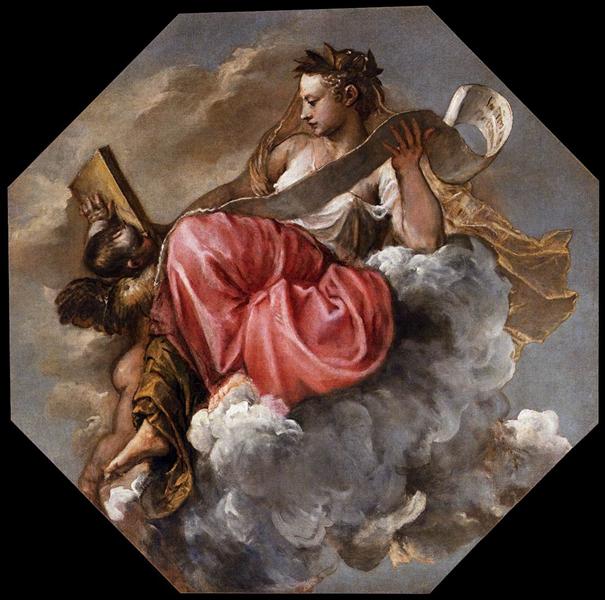
Lady Wisdom – Titian, 1560

The world that we all knew before, could wake up in feeling safe... now it seems that everything has been turned upside down.” Tori Amos

Upside down indeed! An unknown virus goes around the world faster than Phileas Fogg and Passepartout, murdering hundreds of thousands and devastating national economies, creating further madness and mayhem for those still living. Dreams are shattered, lives are placed on indefinite hold by an unseen, capricious, biological mutation arbitrarily making the difference between life and death. We define ourselves by our careers and the virus has created an existential crisis of identity made more acute by our very real physical isolation. It is not surprising to see the selfishness of the “I, Me, Mine” culture we inhabit on vivid display. As David Brooks has noted, we are a “morally inarticulate culture,”[1] adrift at the very time when the most fundamental moral questions should be front and center.

Wisdom cries out in the street; in the squares she raises her voice. At the busiest corner she cries out; at the entrance of the city gates she speaks: ‘How long, O simple ones, will you love being simple? How long will scoffers delight in their scoffing and fools hate knowledge? (Proverbs 1.20-22, NRSV).

Listening to Lady Wisdom has never been more important as now.

I savor the book of Proverbs: a poetic compilation of the roadmap to how God has designed the world to work. The proverbs of “Solomon son of David, king of Israel” illuminates the ways of godly living and the means by which to reflect kingdom work and God’s glory in the details of life and relationships. They are ancient anchors of wisdom that keep us steady and focused on Christ during times of transition and uncertainty: a crucial distinction between reading Proverbs for advice and going to it for wisdom.[2] And, in today’s upside down climate, it is a distinction that is all the more compelling.

As a young father, I used to bristle at Proverbs that appeared to condone corporal punishment: “Those who spare the rod hate their children, but those who love them are diligent to discipline them’(13.24, NRSV); and “Do not withhold discipline from your children; if you beat them with a rod, they will not die. If you beat them with the rod, you will save their lives from Sheol”(23.13-14, NRSV). Sounds like a good way to get arrested today. However, what I have since learned, is that the sages of Proverbs had a more nuanced idea about discipline. In the second verse of the book’s opening act, the Hebrew word, mûsar, (which many translate as “instruction”), is better translated as “discipline.” The noted theologian Ellen Davis writes that mûsar “…always denotes authoritative instruction or correction from God or God’s agent, personified Wisdom, or from a teacher or a parent.”[3] Discipline, in this sense, should be seen in the positive context of setting boundaries; a prescriptive hermeneutical lens of instruction for how to live life, rather than to describe how life is: an understanding of discipline that is well captured by a verse from the Thomas Troeger hymn, “God Marked a Line and Told the Sea.” From verse 5: “We are not free when we’re confined//to every wish that sweeps the mind, //but free when freely we accept//the sacred bounds that must be kept.” [4] As I look at my flourishing twenty-one year old daughter, I can clearly see the living results.

Discipline and boundaries driven by sacred love is a wise teaching indeed, especially for a society that is captivated by every individualistic wish and whim: a society deeply polarized by those whims. “The one who lives alone is self-indulgent, showing contempt for all who have sound judgement. A fool takes no pleasure in understanding, but only in expressing personal opinion” (18.1-2). The Hebrew translated as “lives alone” literally means to separate oneself: it is an ‘us versus them’ way of life that has become our cultural norm,  constituting a very positive danger that rejects the importance and value of community. The price of abandoning community is more than personal isolation or lack of fulfillment: it is anarchy, personal chaos and too often, open and frequently violent hostility toward others. Nowhere is this more clearly on display than with the “my body, my freedom” assertion against the wearing of masks in our struggle to combat the horror of Covid-19.

As we continue to face the bitter divisiveness and uncertainties of our time, the sages offer a way forward, urging us to dive deeply into our faith, an immersion that leads to an internal disposition of stability: “No one finds security by wickedness, but the root of the righteous will never be movedThe wicked covet the proceeds of wickedness, but the root of the righteous bears fruit” (12.3, 12). This is not merely psychological stability, but something deeper than any psychologist could validate. The root of the righteous will never be moved because the righteous are rooted in God: “…their delight is in the law of the Lord, and on his law they meditate day and night. They are like trees planted by streams of water, which yield their fruit in its season, and their leaves do not wither. In all that they do, they prosper” (Psalm 1.2-3, NRSV). This is stability that stands at the foot of the cross and laments with a God that knows our pain and weeps with us. It is a stability whose foundation is predicated on the knowledge that God is not elsewhere and confers the hope to accept the present situation, with all of its limitations as providing all the necessary conditions for faithful living: to ask what, not why; to ask how, and for whom.

 “The root of the righteous bears fruit.” Thomas Aquinas echoed this proverb when he taught that justice is the responsibility that we owe one another as fellow creatures of the One God. Yet, too frequently, we fail to act justly toward others and in the process, we do not do the kingdom work Christ calls us to do. So many of our acts of injustice (economic and personal) stem from a vain pursuit of our “real self” which more money, a more exciting marriage, more prestigious friends and another shopping spree will surely enable us to find and let Covid-19 take the hindmost. We should be fixed, not in that which is blown like chaff in the wind, but in the rootedness of God: “My heart is steadfast, O God, my heart is steadfast. I will sing and make melody” (Psalm 57.7, NRSV). As we move forward, we need to rethink our understanding of the kind of knowledge that comprises wisdom to include an awareness of the political and scientific realities of our world and the necessary responses that promote justice in the social arena. I’ll let Jesus have the last word. “But to what will I compare this generation? It is like children sitting in the market-places and calling to one another, “We played the flute for you, and you did not dance; we wailed, and you did not mourn”… Yet wisdom is vindicated by her deeds’ (Matthew 11.16-17,19b).


[1] David Brooks, “Opinion | The Moral Meaning of the Plague,” The New York Times, March 26, 2020, sec. Opinion, https://www.nytimes.com/2020/03/26/opinion/coronavirus-meaning.html.

[2] John 1.1-3 is a clear echo of Proverbs 8.22-32. Paul picks up on this theme in his letter to the church in Corinth: “For Jews demand signs and Greeks desire wisdom, but we proclaim Christ crucified, a stumbling-block to Jews and foolishness to Gentiles, but to those who are the called, both Jews and Greeks, Christ the power of God and the wisdom of God” (1 Corinthians 1.22-24, NRSV).

[3] Ellen F. Davis, Proverbs, Ecclesiastes, and the Song of Songs, 1st ed, Westminster Bible Companion (Louisville, Ky: Westminster John Knox Press, 2000), 25.

[4] God Marked a Line and Told the Sea, by Thomas Troeger as found in Lift up Your Hearts: Psalms, Hymns, and Spiritual Songs (Grand Rapids, Mich.: Faith Alive Christian Resources, 2013), Hymn #28, verse 5.

And the Word Became Flesh


I recently had a joyful encounter with a young woman who was filled with all sort of questions about her faith. She shared that according to her way of seeing things, God exists and wants her to be good, God is there for her if she needs anything, and, since she tries her best to be a good person, she will go to heaven when she dies. Yet she remarked, that when I preached,  I frequently talk about Jesus Christ as if he is somehow essential to the faith. What’s up with that, she wondered. How does Christ relate to God and why does Christ matter to her spiritual life? Good questions and I thought I might share a bit of our conversation.

Well Skylar, I applaud your attentiveness to my sermons and perhaps you can nudge your Dad the next time he starts drifting off. But seriously, Jesus is essential in our faith and there is much more to all of this than a god who simply wants you to be good and get your ticket punched to go to heaven because of it. So I am glad you have come to me with your questions and I will do my best to help you to a richer understanding of what it is we folks in the Christian faith profess.

Let’s start with you first question about how does Christ relate to God. Simply put, Jesus is God in the flesh, and I know that might strike you as difficult, but our scriptures tell us that God became flesh to dwell with us and rescue us and all of creation from the decay caused by sin. You can read the opening passage of John’s gospel where he speaks about the Word of God that was with God and was God, creating all things and that the Word “became flesh and lived among us, and we have seen his glory, the glory as of a father’s only son, full of grace and truth.” There is a passage in Paul’s letter to the Colossians that also says this, so when you get a chance, take your Bible out and read what he has to say in the 1st chapter about God being pleased to dwell with us in the flesh. That’s who Jesus is, Skylar, God in the same flesh and bones that you are made of. We also refer to Jesus as the second person of the Trinity, and while that is equally significant, it’s a discussion we can have after we get through the concerns you have now.

Jesus, as I said, came into the world to rescue and restore the world and you and I from the sinful and broken state we are all in. It was work that only God is capable of doing and God did so by choosing to become human to die for our sins: atonement. “At-One-Ment” where we are washed clean and reconciled with God.

We don’t earn our way into heaven. We can’t, plain and simple. We are welcomed into heaven through the grace of God’s sacrifice in Jesus and we are assured of a presence in heaven with God by having faith in this work of Jesus as God and human. And because it is by faith and faith alone that this happens, it is vital that we get the object of our faith correct. The incarnate Jesus– incarnate means in the flesh- died on the cross, shedding his blood, for the forgiveness of our sins.  

As humans, we need Jesus and we need him really badly. Without Jesus, we have no hope because we would never be able to come into the presence of God – that get to heaven thing – if weren’t for the work of Christ on the cross. Jesus’ humanity is the key. After he rose from the dead on Easter morning, Jesus eventually ascend to that place we call heaven where we believe him to sit at the right hand of God. The critical component of this is that Jesus can sit, face to face with God as a human being and clear the way for you and I to also stand in front of God one day. He is the one we pray to and we can be assured that God hears our prayers because Jesus is there. The book of Hebrews would be another important book for you to read about this, but it tells us that Jesus did not enter a sanctuary made of human hands, but into the sanctuary of the real deal, heaven, and he appears in the presence of God on our behalf.

Jesus is essential because he makes all the difference in our lives. He is the source of our hope and gives us the ability to face an ugly world with full confidence that he is working, even now to make things right – to restore all of creation to the beauty of the Garden of Eden and the oneness that we humans had with God at the very beginning. Jesus inaugurated God’s kingdom and we are now part of that and as members of his kingdom, we may live yet in this world, but we are called to be God’s representatives, his ambassadors, bringing his truth and light everywhere we go and in everything we do. We call it the church, the body of Christ, and we are part of that body. Jesus was anointed as God’s messiah when he was baptized and he has now anointed us with the same divine oil through the outpouring of the Holy Spirit, the gift we received at Pentecost. It’s why we are called Christians – the anointed ones. We go out into the world, powered by his Spirit, doing what we can as servants of Christ’s body, to love our neighbors the way Christ loves us and to share his truth and the promise of eternal life to all that accept him in faith. It’s kingdom work and that is what our salvation is for and all about. Go in peace to love and serve the Lord.

Photo by Nishant Das on Pexels.com

Before…and…After

Job on the Ash Heap – Jusepe de Ribera

During this time of pandemic, many of us have been confronted by a range of emotions that have been a tough challenge as we have endured isolation, economic duress and much uncertainty. We have many, many questions and very, very, few answers. Who was the author when asked if, in spite of his atheism, he met God and what he might say? Bernard Shaw? Whoever it was, his answer was along the lines of ‘why did you provide so little evidence of your existence?’ At times like this, I have heard several people voice that very lament. I can relate…far too easily. I have been guilty of the same sentiment until I discovered my humanity and with it, humility.

Before…

Job is my buddy – the Job of the Bible, that is. What is likely the oldest text in our bible, the book of Job is part of the wisdom literature and it is a text that has stood me well over the years. If you have never read it, this is as good a time as any and if you have some trouble with biblical language, try the Common English Bible or Eugene Peterson’s take in The Message.

For those that have read it, I don’t know about you, but I have always thought that the opening to the book of Job was a bit odd. The first verse: “There was once a man in the land of Uz whose name was Job”[1] has a Grimm Brothers fairy tale ring to it à la ‘once upon a time.’ And right from this curious opening, we are told that Job “was blameless and upright, one who feared God and turned away from evil.” [2] Blameless and upright? Who can possible be blameless? Maybe the author hadn’t read Paul or their Augustine yet. And then again….

A key to understanding this characterization of Job rests with the Hebrew translated as blameless, the word tam. It is not describing someone that is sinless, but rather one who is morally whole or complete, integrity. Being “upright” implies a sense of straightness or directness in Job’s affairs with God and neighbor; that is, Job would embody the virtues of love for neighbor, care for the poor and a concern with justice. Job exemplifies religious, moral, and ethical integrity that stems from “scrupulous habits of sacrifice combined with a genuinely righteous character;” [3] a manifestation witnessed in Job’s compulsive and meticulous attention to religious detail in the care and concern for his children’s well-being: “And when the feast days had run their course, Job would send and sanctify them, and he would rise early in the morning and offer burnt-offerings according to the number of them all; for Job said, ‘It may be that my children have sinned, and cursed God in their hearts.’ This is what Job always did.” [4] Job is faithful then, in God’s way of life to which God himself testifies on two distinct occasions.[5]

Coupled with his bountiful offspring [6] and wealth, Job “was the greatest of all the people of the east.” [7] Yet when all was lost in disasters that would fell any other person, Job’s initial response to the news was remarkable: “Then Job arose, tore his robe, shaved his head, and fell on the ground and worshipped. He said, ‘Naked I came from my mother’s womb, and naked shall I return there; the Lord gave, and the Lord has taken away; blessed be the name of the Lord.’[8] Job’s rejection of his wife’s seemingly sane conclusion to curse God and die, speaks volumes to the depth of his faith and his integrity:“But he said to her, “You speak as any foolish woman would speak. Shall we receive the good at the hand of God, and not receive the bad?” In all this Job did not sin with his lips.[9]  He is quite confident about the meaning of life and his relationship with God, while all the while, unaware of how much he does not know.  

Yet, sitting on the ash heap in the days of silence that follow, suffering has overtaken Job. In chapter three, we encounter a man that is suddenly questioning the value of a life that is filled with dread, confusion and alienation. If life is ultimately to be one of suffering, why “is light given to one in misery, and life to the bitter in soul?” [10] Although he persistently refuses to abandon his faith in the face of his friends repeated and insulting entreaties to do so, Job’s question, and his dawning fear of the enmity of God, cause him not to let go of God, but form the beginning for letting go his understanding of God, himself and life: the necessary step leading to the transformed Job we meet in the epilogue.

After…

The turn comes after God’s first speech from the whirlwind as Job admits to a respectful silence: “Then Job answered the Lord: ‘See, I am of small account; what shall I answer you? I lay my hand on my mouth.’[11]  In verse 40.8, [12] God confronts Job’s limited ‘either/or’ worldview head on with a previously unthinkable challenge of ‘both/and’: that Job can be innocent and God can be just, a perspective that impels Job to a deeper grasp of reality now fully accepted after God’s second speech: Job, stripped of his ego, recants and reconsiders what being human means: “I had heard of you by hearsay, but now my eye has seen you. Therefore, I recant and change my mind concerning dust and ashes. [13] Ellen Davis argues, “Job’s final words indicate that he accepts correction implicit in the vision and at last claims his integrity of God’s terms, surrendering to a wholeness that he can never comprehend.”[14] The voice from the center of the whirlwind clearly demonstrates to Job that he is not at the center of the universe.

It is a transforming surrender that secures the courage for Job to claim this new integrity and identity with forgiveness, joy and lightheartedness, knowing that things are not at all the same. He can pray for his tormenting ‘friends,’ and perhaps most telling of all, he has the courage to once again have children: to reinvest in family and life with full knowledge of the uncertainties that life entails. The change in Job from a fearful and circumspect man, anxious about the possible sins of his children, to a forgiving, carefree, parent that can name his daughters Dove, Cinnamon, and Eye of Horn Shadow, as well as breaking with all social norms by leaving them an inheritance, shows just how far Job’s character has been changed by his inspirational model, God.

In many ways, the book of Job is posing the great question – Is there a living God beyond what we can imagine? Is there a Being independent of us, beyond the boundaries of earthly life and earthly struggle? Is there a God who speaks with a voice that is not simply projected out of our own human consciousness? Is there a God that can deliver us from the dust? In a word, yes.

Job teaches several faithful responses: speak to God honestly and directly, trusting that God will answer; risk living and loving, even after great pain; and delight in a world that is wild and beautiful and risky, trusting in the faithful God who created and still sustains that world. Job’s willingness to once again embrace life, fully and joyously, is at the very heart of what it means to be human and to engage in faithful living – even when it appears that there is nothing in it for us. Life within the limits of human wisdom is a life of radical faith – to borrow a phrase – it is a free fall into the arms of what our hope tells us are the outstretched arms of God.  It is a life that sees the truth of the cross and embraces it.

I can personally testify to the dilemma Job faced. What I once treasured was taken from me when we lost our daughter Sarah. What I once worshipped proved to be a golden calf. Blinded by the greed of wealth, I did not see that my two business partners were stealing from our company and our investors. What I valued turned to dust as our house and cars were repossessed and my freedom was taken from me. In the midst of great pain, I too cried out and like Job, I was changed.

Job was with me at my wife’s bedside when I broke the news of Sarah; Job was at my side as we endured five miscarriages until the gift of Skylar. Job was at my side as we faced living on the streets; Job was at my side all throughout separation from my family while I was imprisoned. Job was at my side in the midst of my deepest darkness and greatest pain and ultimately taught me to see things from God’s perspective; I began to live in joy with my wife and daughter, the greatest gift from God second only to his son: my life was more than restored.

The fear of the Lord, says scripture, is the beginning of wisdom and the lesson that I am continually learning is that through Job and all of scripture, the living God of infinite power, yet infinite mercy, speaks to all of us that have the ears to listen. However much the storms of this life may batter me within and without, I know that I can put my hand in the hand of the man from Galilee. Perhaps you will too.


[1] NRSV

[2] Job 1.1, NRSV.

[3] Carol M. Bechtel, ed., Touching the Altar: The Old Testament for Christian Worship, The Calvin Institute of Christian Worship Liturgical Studies Series (Grand Rapids, Mich: William B. Eerdmans Pub, 2008), 183.

[4] Job 1.4-5, NRSV.

[5] See Job 1.8 and 2.3

[6] He is blessed with seven sons and three daughters, the perfect complement of children. See Gerald Henry Wilson, Job, New International Biblical Commentary Old Testament Series 10 (Peabody, Mass: Hendrickson Publishers [u.a.], 2007), 19.

[7] Job 1.3, NRSV.

[8] Job 1.20-21, NRSV.

[9] Job 2.10, NRSV.

[10] Job 3.20, NRSV.

[11] See Job 40.3-5

[12]Will you even put me in the wrong? Will you condemn me that you may be justified?” NRSV.

[13] Job 42.5-6. I find agreement here with the arguments for the translation offered by Ellen Davis in Ellen F. Davis, Getting Involved with God: Rediscovering the Old Testament (Cambridge, Mass: Cowley Publications, 2001), 141.

[14] As found in Carol M Bechtel, Job and the Life of Faith: Wisdom for Today’s World (Pittsburgh, PA: Kerygma Program, 2004), 52.

Can We Talk?

As is often the case, I was enjoying my end of work day glass of wine while zoning on some tunes that my favorite radio station was spinning. Keep Talking by Pink Floyd came on and it got me day dreaming a bit about our divided and divisive society.

For millions of years mankind lived just like the animals. Then something happened which unleashed the power of our imagination. We learned to talk [1]

We learned to talk. Language, communication, dialogue. Actions that involve one person interacting with another. To express and or exchange ideas with another by means of spoken words. A new age term for dating. Any way you cut the mustard, talking is what brings us together to share, develop and communicate our desires, fears, aches, pains and whatever else. It is what sets us apart from the animals. But have we? Set ourselves apart from the animals that is?

Our society has lost any vestige of meaningful civil and political discourse particularly when people disagree: polarization seems to be the name of the game. Why do we resort to hateful speech and mean-spirited Tweets? Or perhaps a little more telling: “Can I really sit at Thanksgiving dinner with ‘that’ uncle.” Many are forced into uncomfortable silence when even the closest of friends begin ranting. We struggle to find ways for  sincere conversation with those whose values we find repugnant. As the protests against systemic racism and privilege continue to unfold and another election cycle is upon us, there has never been a more important time to keep talking, but can we do so when we have lost connections with each other. In many ways, we are alone together because we have abdicated the ability to be intimate.

There is a perspective that just might help us to re-center and re-focus and recapture our desire for, and comfort with, intimacy: the ability to talk with one another. It’s an unusual choice by some standards, but I would argue (and do) that deep within the wisdom literature of the Bible lives a blueprint that God has provided for times such as these.

The Song of Songs, or as some may know it, The Song of Solomon, is not an easy book for most casual readers and has certainly challenged many of the ‘not so’ casual crowd of clerics and academia, myself included. Yet it is the greatest of all songs and that demands our attention as in some ways, the book may very well be as relevant, or more so, for us today, than at any time in the past. In the words of my one of my seminary professors, Dr. Carol Bechtel,  it is a book that shows the world and our youth “a more excellent way.” [2]

The note theologian, Ellen Davis, raises the challenge that “the cultivation of real intimacy is the greatest social and spiritual challenge of our time” [3] I concur. The centrality of electronic devices has led to a society that is increasingly isolated, hiding behind avatars that tolerate, and may indeed encourage, disconnection by promoting misconceptions, partial truths, language vagueness, and lack of accountability. Texting, email, and posting, allow us to present the self as we want to be: we can edit and delete, we can retouch our faces, our voices, and our bodies. We no longer have conversation: it’s too messy.

In the process, we are sacrificing living together, acting together, and creating community that engages and challenges, settling instead, for the quotidian comfort of imprecision in mere connection. Sheri Turkle, social psychologist and Professor of the Social Studies of Science and Technology at the Massachusetts Institute of Technology, makes this observation in a blog about reclaiming conversation:

At home, families sit in silence at the dinner table. We text (and shop and tweet) during class and while on dates. At work, executives email during meetings. We’re connected more than ever; not necessarily to one another, but to our keyboards and touch screens. We seek and find ways around real, face-to-face-conversation. We lack empathy and don’t know how to be alone – or truly together. [4]

Turkle’s comment advances a crucial point: we are foregoing our central calling to be in relationship and to love one another. Intimacy is one of the more important and blessed parts of the human condition. Ultimately, losing our ability for mutual conversation destroys the ability to discover each other, compromising our capacity to converse with ourselves and with God. We risk forfeiting prayer: a tragedy of immeasurable consequences.

Furthering Davis’s challenge, the Song illumines how much is still possible in the land ‘east of Eden.’ As well as living in a world driven by social media, we inhabit a culture that is thoroughly imbued with pornography by way of the very same devices that have alienated humanity from conversational intimacy, creating a culture that has been perverted by an obsession with the physical instead of understanding the significance and life giving love of another’s nephesh. The Song “affirms as incomparable the joy of faithful sexual relationship.”[5] Pornography drives a perspective that is relentlessly selfish, brazenly promiscuous, and ruthlessly exploitive, while the Song so beautifully demonstrates the goodness of God’s gift of sexuality that is mutual, generous, and faithful. Our bodies and our relationships were deemed very good by God, something God took on himself in Christ in order to redeem it all from the fall.

Finally, and perhaps, just perhaps most important of all, the Song in many settings celebrates the beauty of the lovers with language that evokes the beauty and bounty of God’s good creation. [6] Davis makes note that the Song never gives a clear picture of what the lovers look like, rather instead, it portrays the very clear image of love for a lush and abundant land redolent in spring. [7] Affirming love for creation and its inherent goodness serves the “indispensable function…in our age [to] remind us that loving attachment to land, our particular homes and fragile planet that we share with other living creatures, is a religious obligation.” [8] It was, after all, our first obligation and the implications that come from our shirking responsibility become more compelling with each day. As Gilmour intoned: It doesn’t have to be like this. All we need to do is Make sure we keep talking


[1] David Gilmour, Richard Wright, Polly Samson, Keep Talking, vol. Division Bell, Pink Floyd (London: Columbia, 1993).

[2] Carol M. Bechtel, “Lecture on the Song of Songs Part IV,” Western Theological Seminary, Holland Michigan, June 16, 2018.

[3] Ellen F. Davis, Proverbs, Ecclesiastes, and the Song of Songs, 1st ed, Westminster Bible Companion (Louisville, Ky: Westminster John Knox Press, 2000), 235.

[4] Sherry Turkle, “Reclaiming Conversation,” Sherry Turkle (blog), January 19, 2018, https://sherryturkle.com/reclaiming-conversation/.

[5] Davis, Proverbs, Ecclesiastes, and the Song of Songs, 235.

[6] Chapter four is notable as the male voice extols the beauty of the bride with references that allude to the promised land of milk and honey: “Your lips distill nectar, my bride; honey and milk are under your tongue; the scent of your garments is like the scent of Lebanon. A garden locked is my sister, my bride, a garden locked, a fountain sealed. Your channel is an orchard of pomegranates with all choicest fruits, henna with nard, nard and saffron, calamus and cinnamon, with all trees of frankincense, myrrh and aloes, with all chief spices – a garden fountain, a well of living water, and flowing streams from Lebanon.” Song Songs 4.11-15, NRSV

[7] e.g  see chapter 2, verses 8-15.

[8] Davis, Proverbs, Ecclesiastes, and the Song of Songs, 236.

Silence is not Golden…

Photo by Alexas Fotos on Pexels.com

There has been much written, spoken and hotly debated recently regarding “white privilege.” As the protests over the unjustified murders of our black brothers and sisters have grown and spread, I have written elsewhere about how they have sparked heightened personal discernment and I remain prayerfully encouraged that there is more to this than activist chic. Yet with the ying comes the yang and there is angry backlash from those who refuse to understand the bigger picture of white privilege. White privilege is not a statement about work ethic or lack thereof. Nor is a statement that refers to being born with a silver spoon in your mouth. White privilege doesn’t mean that your life hasn’t been hard: it means that your skin color is not making it harder. It is a comprehensive statement of the overt and covert ways that a Caucasian ethnicity has been manipulated to create advantages in our society that others do not enjoy, and in so doing, has created and perpetuated a severe socio-economic divide that marginalizes and dehumanizes people of color. In other words, white privilege is a metaphor for the systemic racism that benefits the powerful. That is anathema to Christ’s commands to love God and neighbor.

In an earlier post (see Peace, Peace), I have called out the church’s silence on the hypocritical behavior of a large number of white, evangelicals for their support for a politician who is all about maintaining white, patriarchal, misogynistic privilege.  In this post, I want to take a look at what white privilege looks like through a biblical lens and I found Jeremiah to have much to say on this topic.

As with Amos and Hosea, Jeremiah’s oracles condemning social injustice and hypocritical religious practices by the temple leadership that undergird said injustices, are as persuasive, urgent and timely today as they were 2,600 years ago. The fabric of our social structures are frayed to the point where questioning their survival is a legitimate concern. The ‘gaslighting’[1] war on truth that has erupted, seeks to manipulate and control the populace in ways that promote surrender and acquiescence to conditions that serve, not our society or country, but the vanity and rapacious greed of certain centers of the power elite. The continual drumbeat of ethnocentric fear is merely another symptom of a society whose leadership, both sacred and secular, has engaged in marked indifference for the weak, the powerless and the marginalized, condemning far too many to the trash heap of neglect. 

It is from this context that Jeremiah’s words in 5.26-31 caused me to sit up and take notice, as the old saw goes. The thematic elements of the two poems that I see contained therein have resonated deeply with me for some time. In this time of deep social unrest and protest, they do so now with graver interest and heightened concern. White privilege.

The Text

For scoundrels are found among my people; they take over the goods of others. Like fowlers they set a trap; they catch human beings. Like a cage full of birds, their houses are full of treachery; therefore they have become great and rich, they have grown fat and sleek. They know no limits in deeds of wickedness; they do not judge with justice the cause of the orphan, to make it prosper, and they do not defend the rights of the needy. Shall I not punish them for these things? says the Lord, and shall I not bring retribution on a nation such as this? An appalling and horrible thing has happened in the land: the prophets prophesy falsely, and the priests rule as the prophets direct; my people love to have it so, but what will you do when the end comes? (NRSV)

Let’s do a little exegetical spelunking that will deepen our appreciation for what it is that God is saying to Jeremiah.

 One of the understated beautiful elements in the books of the prophets is the poetic language used by God and we see that clearly in the passage above. Actually, the verses here are part of a larger, three poem movement that begins in 5.20 on the peoples perversity. I have chosen to focus on the last two poetic movements: the people’s injustice in verses 5.26-29  and finally, the people’s leaders in verses 5.30-31.

In verses 26-31, God is speaking, concluding a longer speech in which he exhorted Jeremiah to declare to the house of Jacob a prophecy warning the foolish, rebellious and complacent people that their rejection and lack of reverence of him would be their doom. The text at hand is an expression of a number of specific evils that were characteristics of the people’s rejection; a state of affairs and blatant covenantal breach that God could not ignore. The final poetic speech condemns the leaders of the people for also falling victim to the corruption that marked the ethos of the age. As we parse things further in our exegetical digging, there are eight couplets that makes this very clear.

  1. 26 For scoundrels are found among my people; they take over the goods of others.
  2. Like fowlers they set a trap; they catch human beings
  3. 27 Like a cage full of birds, their houses are full of treachery; therefore they have become great and rich, 
  4. 28 they have grown fat and sleek. They know no limits in deeds of wickedness;
  5. they do not judge with justice the cause of the orphan, to make it prosper, and they do not defend the rights of the needy. 
  6. 29 Shall I not punish them for these things? says the Lord, and shall I not bring retribution on a nation such as this? 
  7. 30 An appalling and horrible thing has happened in the land: 31the prophets prophesy falsely,
  8. and the priests rule as the prophets direct; my people love to have it so, but what will you do when the end comes?

The unity of the poems is accomplished through the theme ‘people’ around the central thread of social injustice. In verses 26-28, the people are ‘scoundrels’ that act deceitfully, entrapping other people through their fraud and deceit. Their homes are filled by the theft of others goods and services that accrues to their selfish benefit. They have perverted justice to serve their own ends at the expense of the poor and the weak. This is the evil and injustice that has invited judgment by the Lord.

Verses 30-31 declares that even the spiritual leaders are guilty of the same corruption. Instead of speaking the divine word, the prophets spoke their own babble; a self-serving discourse that comforted the power elite and further marginalized those outside. Their great evil was the prophetic perversion of the truth to such a degree that the people loved the miserable conditions to which their broken society had sunk. There was great comfort in not being condemned from the pulpit. Finally, when this era of evil has been rendered to the dustbin by the Lord, an entire nation would have to face the consequences of building a way of life on avarice and greed.

There is something jarring about the imagery elicited by the words ‘fat and sleek’ in verse 28, as on the surface, they describe seemingly opposing conditions. Upon a little closer examination, we find a compelling picture of the condition of the power elite that God is painting. Merriam-Webster lists three categories of definitions for fat: 1) notable for having an unusual amount of it, that is plump, well-filled out, oily, greasy matter; 2) as a verb, to make fat; 3) animal tissue, the best or richest part, something in excess. Sleek is defined as a transitive verb to cover up, to gloss over and as adjective to mean smooth or glossy as if polished, having graceful lines, and also as having a prosperous air. [2] The scoundrels have bulked up, greasy, corpulent people fattened by their theft and greed, that may have a prosperous (pompous?) air, but their polished, glossy surface is a veneer that reflects back to all, especially to the Lord, the results of their evil ways.

The clear and flagrant defiance of God and revolt against the covenant by the evil doers makes his rhetorical question in verse 29 seem almost akin to our common expression of ‘Really?’ when confronted with the obvious attempt at subterfuge or behavior so blatantly foolish.

The unjust actions of the people are captured well with the simile of the fowler. Bird hunters of the time would use a hidden net and the hunters would also hide, waiting for a signal from a watcher to release the net and ensnare the prey. God has invoked powerful imagery that well illustrates the depravity of those condemned. Like a fowler, the scoundrels deliberately planned their evil work, secreting themselves in ways to trap and exploit the weak for their own gain. Like a fowler returning home with a cage full of birds, the people filled their mansions and bank accounts with the fruit of their theft: the rich got richer at the expense of the poor and the weak.

There is a metaphorical hint in play, I think as well, as the law courts should have been the domain for integrity, checking rapacious greed. In verse 28, we see that the scoundrels “know no limits in deeds and wickedness; they do not judge with justice the cause of the orphan, to make it prosper, and they do not defend the rights of the needy.” The orphan is a traditional symbol of God’s concern for the weak, the poor and vulnerable who were without influence and power. Their condition should have been upheld and defended with justice, yet the perversity of the land was so great that even these bastions of relief are corrupted by the rich and the powerful so as to serve the their own ends to the disadvantage of the poor.

The Nature of Power

There is an obvious power of the corrupt on display with their exploitation of the poor and the weak. Yet, the word of the Lord is where the real power rests as Jeremiah had been summoned to “Declare this in the house of Jacob, to proclaim it in Judah …Shall I not punish them for these things?” [3] Perhaps less noticed is that word of the Lord has conceivably stripped the people of their status as the chosen ones of God. The Hebrew translated as ‘on a nation’ in verse 29b is begow, from the root goy, meaning a gentile people or nation. By their deceit and evil, God has declared the wicked as unholy and unworthy of being his people. That is a powerful condemnation of those who have been deceptively paying lip service to God all the while making a mockery of their activities with their unjust and evil doings. White privilege.

The Heart of God

The biblical witness is replete with testimony to God’s love, patience and care for his chosen people:

And the LORD came down in the cloud and stationed Himself with him there, and He invoked the name of the LORD. And the LORD passed before him and He called out: “The LORD, The LORD a compassionate and gracious God, slow to anger, and abounding in steadfast kindness and good faith, keeping kindness for the thousandth generation, bearing crime, trespass, and offense, yet He does not wholly acquit, reckoning the crime of the fathers with sons and sons of sons, to the third generation and the fourth.” [4]

Chapter five of Jeremiah begins within that same framework with the opening echoes of Abraham’s questioning God in Genesis 18 over whether Sodom can spared if ten just men can be found in it. God is far more generous here and would spare Jerusalem if one just person could be unearthed. [5]

God cares greatly for his flock and in spite of the wide scale rejection and depravity that he is encountering, God still bears his heart and shows his love and concern when in verse 26, he proclaims: “For scoundrels are found among My people” (emphasis mine). God laments the injustices heaped upon his people, those God has commanded to be cared for, the powerless members of society who are vulnerable to exploitation. The biblical witness is abounding in examples with how dear these groups are to God. [6] One illustration: “No widow or orphan shall you abuse. If you indeed abuse them, when they cry out to Me, I will surely hear their outcry. And My wrath shall flare up and I will kill you by the sword.” [7] In the text at hand, God shows his disgust and anger at those that are in a position to effect justice and restoration, but chose to line their own pockets instead. From verse 28:  “They know no limits in deeds of wickedness; they do not judge with justice the cause of the orphan, to make it prosper, and they do not defend the rights of the needy.” That is righteous wrath about white privilege then and it is righteous wrath that can be levied on white privilege today.

Adding fuel to the fire, God is wrestling with the ethos of deceit and betrayal that has become so rampant that the nevi’im (prophets) and kohaním (priests), with their false teachings and the lies that supported them, have colluded in its promotion. White privilege. The people have willingly embraced the fabrications of the leaders and sunk to depths of depravity that they actually enjoy and celebrate. White privilege.

God, as any loving parent must do when faced with little choice, wrestles with the agony of being forced to bring discipline to his wayward children. “He can no more forgive, He must avenge himself, He has been deceived, offended, betrayed: it is His own possession, with which he must part.” [8] God’s pain is palpable, his torment perceptible, his care for his people tangible.

White privilege. “When a culture begins to feel threatened by its own inadequacies, the majority of men (sic) tend to prop themselves up by artificial means, rather than dig down deep into their spiritual and cultural wellsprings. America seems to have reached that point.” [9] Indeed. When the Roman empire began to disintegrate, it turned to an increasing reliance upon a military establishment rather than correcting the corruption that was rampant within it. Vicious dogs and ominous weapons. I think we know how that turned out: let us learn from history to not repeat that mistake because there is hope for us if we listen and turn around.

We live in a time when Jeremiah speaks loud truths from the ancient past. The parallels with our politicians and administration and society at large are frightening. As Christians, we are called upon to engage in kingdom work and that means tackling the problems that we face with humility, justice and love. It is caring for the sick, the orphan, the disenfranchised and working to eliminate the systems and nonfreedoms which cause the afflictions we now face. Basic civil rights and political freedoms are essential ingredients that produce our social values and that can only occur when there is freedom to participate at all levels. White privilege is a metaphor for limitation. As one observer noted, it is as if we started playing a game of Monopoly and kept non-Caucasians from the game until it had been underway for several days. The choice of social values cannot be made by an autocratic few – that’s why we threw tea into Boston Harbor. White privilege is all about maintaining that autocratic system; a system that flies in the face of loving our neighbor. It must be brought down. Let us pray that Jeremiah’s indictment of the Jerusalem elite then and the white privilege of today, does not continue to fall on deaf ears. “What will you do when the end comes?” Let our answer be to engage the systemic change the gospel of Christ calls for and may it be within every fiber of every soul and across every corner of this country.


[1] This term comes from the 1938 stage play Gas Light, in which a husband attempts to drive his wife crazy by dimming the lights (which were powered by gas) in their home, and then he denies that the light changed when his wife points it out. It is an extremely effective form of emotional abuse that causes a victim to question their own feelings, instincts, and sanity, which gives the abusive partner a lot of power (and we know that abuse is about power and control). Once an abusive partner has broken down the victim’s ability to trust their own perceptions, the victim is more likely to stay in the abusive relationship. “National Domestic Hotline – What Is Gaslighting?,” The National Domestic Violence Hotline, accessed December 13, 2018, https://www.thehotline.org/.

[2] “Merriam-Webster Dictionary,” Merriam-Webster.com, accessed December 21, 2018, https://www.merriam-webster.com/dictionary/fat.

[3] Jeremiah 5.20, 29, NRSV.

[4] Exodus 34. 6-8, Robert Alter, ed., The Hebrew Bible: A Translation with Commentary, trans. Robert Alter, First edition (New York ; London: W. W. Norton & Company, 2018), Vol. I, The Five Books of Moses, 349.

[5] “Search its squares and see if you can find one person who acts justly and seeks truth- so that I may pardon Jerusalem.” Jeremiah 5.1, NRSV.

[6] E.g. see Job 29.12, 31.16-18;  Psalms 10.14 68.5, 82.3, 146.9; Isaiah 58.7.

[7] Exodus 22.22-23, Alter, The Hebrew Bible, Vol 1, The Five Books of Moses, 307.

[8] Abraham Joshua Heschel, The Prophets: Two Volumes in One, 1. Hendrickson Publ. print (Peabody, Mass: Hendrickson, 2007), Vol. 1, 109. citing P. Volz, Der Prophet Jeremia (Leipzig, 1922), p 60 from the translation of same by E.A Leslie, Jeremiah (New York, 1954), 60.

[9] “A Testament of Hope” A Posthumously published essay Martin Luther King, A Testament of Hope: The Essential Writings and Speeches of Martin Luther King, Jr, ed. James Melvin Washington, 1st HarperCollins pbk. ed (San Francisco: HarperSanFrancisco, 1991), 323.


Growing up – What do you want to be?

It took me more than forty years to finally listen to the hound of heaven’s answer to that question that seems to be asked so very early and often in life – what do you want to be when you grow up? Working for my church brings me into constant contact with the cherubs of our nursery school, and I can tell you, they are being asked to answer that question at the age of four – fire fighter, police officer, doctor – the standard answers that we always hear from our children at that age.

But the question is always lurking just beneath the surface for most of our lives and it shows up in this one  – “what do you do?”  – “what do you do?” What do you do is one of the first questions that comes up at any cocktail or dinner party when we meet new folks. What do you do? Not who are you, but what do you do? I’m a lawyer, I’m a teacher, I’m dog catcher, a plumber, baker and a candle stick maker. We claim our identity and that of others in a job description as if that is the sum total of who we are.

In the post Eastertide of Pentecost, these are important questions for us to be reconsidering in the light of the risen Christ who has called us to follow him – to be something more than what our secular career choices claim to say about our identity and the subconscious desires that drive us to believe that the good life is found in another shopping spree and bigger house. We are called to an identity that is something far greater and enduring – Jesus calls us to be the people of God.

“Now the eleven disciples went to Galilee, to the mountain where Jesus told them to go. When they saw him, they worshipped him, but some doubted. Jesus came near and spoke to them, “I’ve received all authority in heaven and on earth. Therefore, go and make disciples of all nations, baptizing them in the name of the Father and of the Son and of the Holy Spirit, teaching them to obey everything that I’ve commanded you. Look, I myself will be with you every day until the end of this present age.” Matthew 28.16-20, NRSV

The Great Commission – There are couple of pieces in these verses that I want to look at just a bit more closely for a moment.

Now the eleven disciples went to Galilee – The number 11 is a monkey wrench in the gears: it is not the perfect 12. Yet Matthew sees Jesus sending an imperfect church, a fallible church, a less than perfect bunch, into the world to do his perfect work.

Disciples – It is important to see that those commissioned are not called leaders, church officers, elders, deacons or even apostles, but simply disciples. That’s all a Christian should ever want to be: a disciple.

Went to Galilee – The eleven have obeyed the command relayed by the faithful women. The call to come to Galilee, is a call to believe the Lord and his resurrection enough, to make a trip to see him – a trip that took 3 days from Jerusalem if you went THROUGH Samaria – add a couple of days if you went around Samaria. It was a call to trust, much like Abraham’s trusting God when he was told to go, because it is a call to meet someone who has died and may very well not be there. It’s what we call faith: the faith of discipleship is the risk of daring to believe that the Lord will be there when he calls us. By coming to Galilee, the disciples have returned to the place where Jesus’ earthly ministry got underway, the place where they faced their modest beginnings and in that place, their lives break out into a huge worldwide horizon. That they meet Jesus as a group –  not in private one-on-one breakout sessions –  shows that this is a meeting that honors community and worship services, all of which shows us that Jesus meets his disciples in a special way in the fellowship of his believing people.

They worshipped him, but some doubted – Some doubted – we really don’t know if they all doubted or just a few, the Greek is ambiguous at best, but how can they worship Christ if they have doubts? And how could any of these eleven, having just seen the risen Jesus, doubted at all? From a theological and spiritual perspective, the notion that the disciples who worship and yet doubted is evangelical and deeply profound. Worship and doubt, together in the same sentence.

Just as Jesus was led up by the Spirit into the wilderness to be tempted by the devil, so we Christians live in a war between the spirit of worship and the spirit of doubt – the spirit of worship as God’s people and the spirit of the world’s people, McDonalds and Amazon Prime. Jesus doesn’t correct, exorcise or otherwise attack this doubt as he instead quietly overlooks it, as if it is normal. By his great commission, Jesus is teaching that the disciples will win their war on doubt by following his command. Somewhere, I once read that Albert Schweitzer once said: “Follow him and you will know Him,”  and while I am at a loss to properly cite the source, it is true no matter who said it. Doubt is part of our human imperfections this side of the resurrection and Matthew’s good news is that doubt and worship can and do coexist. Doubting worshippers are Jesus’ material in mission – Blessed are the poor in spirit, for theirs is the kingdom of heaven – blessed are those who worship the risen Lord and who still struggle with their doubt.

All authority has been given to me, so go out there, baptize and disciple. Baptize: it’s Christian evangelism. Go out and live and talk with people until people believe and seek baptism into Christ: that’s discipling. Disciples live and talk with people in such a way that they teach them all of Jesus’ commands: that’s Christian education. And it is these people that Christ promises to always be with. The great commission – the great commission to be – to be disciples of Jesus, united to him in the waters of baptism by the power of the Spirit – a relationship that makes us the children of God, the very people of God. I’ll have more to say about this in another post.