I listen to the wind, To the wind of my soul // Where I’ll end up, well, I think // Only God really knows…
The Wind, Cat Stevens, 1971
Over the past few months, several readers have posed a variation on the following question: “I looked up ‘Reformed’ in the encyclopedia. It said it was a branch of Christianity that strongly emphasized predestination. If, as we read in Luke 14, that all are invited to the table, how can we believe in predestination?” As the old Saturday Night Live skit would say – discuss! So let me share with you a conversation that I had with my daughter on this often sticky wicket.

Well I must say Skylar, that you raise a question that many before you, and many that will come after you, have puzzled over as well. Admittedly, this can be a difficult doctrine to understand, perhaps even one that provokes anger in some, but the short answer to your question is yes, we do believe it. I hope that I can help you to understand why, by helping you better understand what it means. The term “predestination’ otherwise known as the doctrine of election, originates in the work of St. Augustine, who was the Bishop of Hippo in North Africa from 396 C.E. until his death in 430 C.E. It was John Calvin who more fully developed Augustine’s thoughts in his seminal work, The Institutes of the Christian Religion. “We call predestination, God’s eternal decree, by which he compacted with himself what he willed to become of each man. For all are not in equal condtion; rather, eternal life is foreordained for some, eternal damnation for others. Therefore, as any man has been created to one or the other of these ends, we speak of him as predestined to life or death” (Institutes of Christian Religion :Two Volumes, ed. John Thomas MacNeill, trans. Ford Lewis Battles, II.21.5).
I will admit that the notion of election has always created some tension within me at times as well, and I know that it is one that continues to have its friction and tension points with our current culture that firmly believes, in Babel like fashion, that we can be whatever we decide to be. As Calvin says himself: “A baffling question this seems to many. For they think nothing more inconsistent than that out of the common multitude of men some should be predestined to salvation, others to destruction.” (Institutes, II.21.1) Baffling might be a bit of an understatement.
All of this is very interesting to consider given that the concept of election has its roots in scripture and is not new to Augustine or Calvin or anyone else, for that matter. Think of that foundational teaching that we in the Reformed tradition adhere to: ‘sola scriptura,’ by scripture alone. Augustine and Calvin did not simply dream this doctrine up in a self-righteous undertaking. There are countless places in scripture where we meet elements of election: Cain’s offering vs Abel’s; Isaac over Ishmael, Jacob and Esau; David over Saul and so forth. The psalms and the prophets are rfie with language noting God’s choice of some over others: e.g. 33.12; 65.4; 105.6, 42-43 to cite a few).
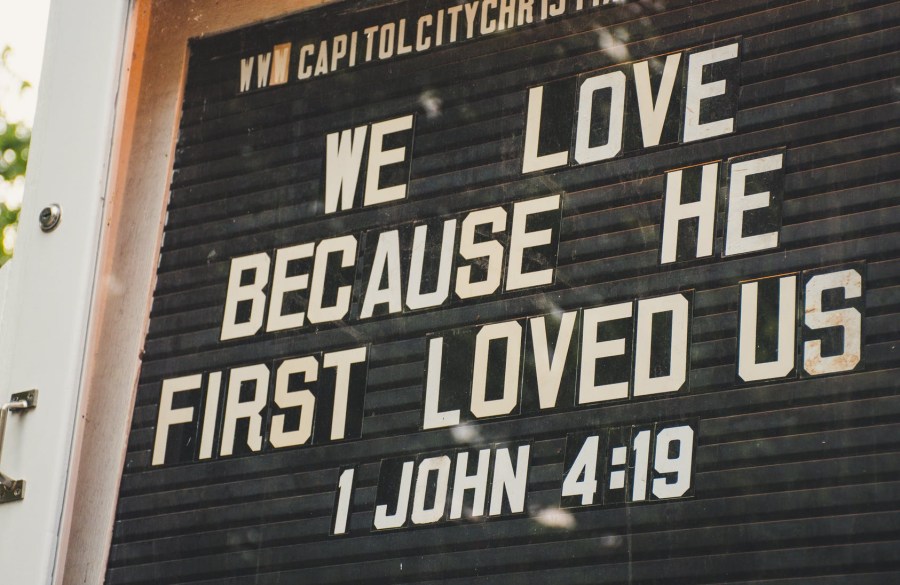
Perhaps the classic articulation of election is witnessed in the book of John, chapter six, when Jesus states “No one can come to me unless drawn by the Father who sent me; and I will raise that person up on the last day…” Skylar, please, please take note of what Jesus says – ‘‘unless drawn by the Father.” Because God loves us first, it is only through the grace of God that we are drawn to God to begin with. Paul makes note of this in his letter to the Ephesians: “…just as he chose us in Christ before the foundation of the world to be holy and blameless before him in love. He destined us for adoption as his children through Jesus Christ, according to the good pleasure of his will..” (Ephesians 1.4-5, NRSV). Our status before God and our relationship with God is utterly and completely dependent upon the grace of God and God’s pre-determining action. We have nothing whatsoever to do with it.
As children of the enlightenment, post enlightenment, modern, postmodern – whatever label you might want to place on the philosophical influences that have shaped our western culture and worldviews, we think and conclude that we are. The notion that the self cannot determine its fate, especially given said fate was set prior to being formed in the womb, is a concept that not only grates against everything we have been taught and indoctrinated with regarding merit and work, it is one that is impossible to get our limited capacities in a position to understand. In the 139th psalm, the writer sums this up pretty well for me and I hope this helps you as well:
“…O Lord, you have searched me and known me. You know when I sit down and when I rise up; you discern my thoughts from far away. You search out my path and my lying down, and are acquainted with all my ways. Even before a word is on my tongue, O Lord, you know it completely. You hem me in, behind and before, and lay your hand upon me. Such knowledge is too wonderful for me; it is so high that I cannot attain it… For it was you who formed my inward parts; you knit me together in my mother’s womb…My frame was not hidden from you, when I was being made in secret, intricately woven in the depths of the earth. Your eyes beheld my unformed substance. In your book were written all the days that were formed for me, when none of them as yet existed. How weighty to me are your thoughts, O God! How vast is the sum of them!
Scripture is quite clear – God has known us before we are and written all of our days in God’s book before our days were upon us. Yes, we believe in predestination because God tells us that is it so.
 A Prodigal's Periodical