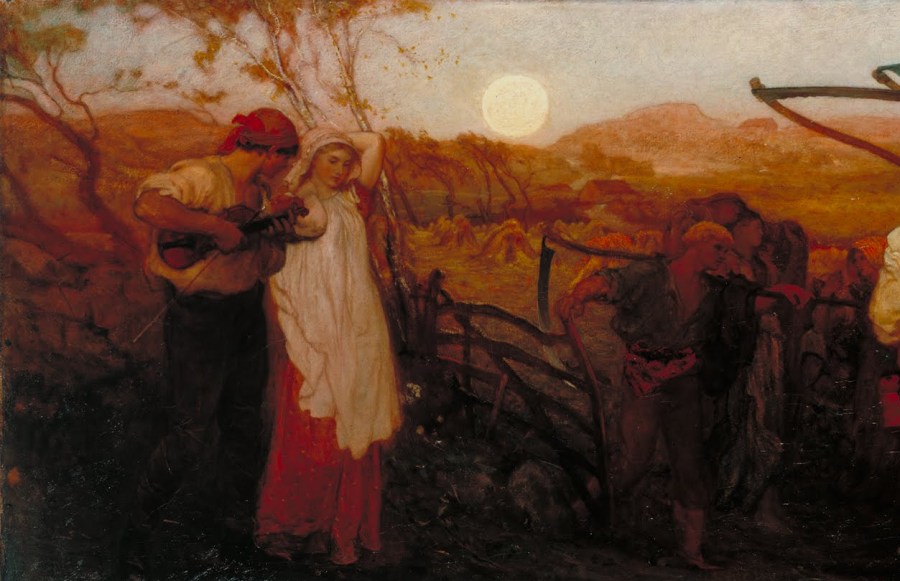
When we were strangers // I watched you from afar // When we were lovers // I loved you with all my heart // But now it’s gettin’ late // And the moon is climbin’ high // I want to celebrate // See it shinin’ in your eye // Because I’m still in love with you // I want to see you dance again // Because I’m still in love with you // On this harvest moon
Harvest Moon, Neil Young, 1992
Harvest moons. The moon that is so named for shining ever so brightly in the season of waning fertility, the crops have been harvested and the long, dark winter is about to set in. Neil Young has succinctly captured something about life, love, and marriage that resonates with me. It is a picture of mature love that can flourish in marriage. But more than half the time, those “I do’s” are lost in a sea of despair and recriminations that end in divorce. I was one.
1 Corinthians 7.10-16 gives me heartburn: and in varying degrees, so does Mark 10, Matthew 5 and 19, Luke 16, and Roman 7.1-3. To be condemned to a lifetime of misery that a wrong marriage brings strikes me as antithetical to our initial directive to be fruitful and multiply. The fact remains, that life in a marriage gone bad is anything but fruitful. It is a life that has died in more ways than one.
Beth and I knew this first hand. We both were in hellish, dead end marriages when we met. We were blessed by God to have found each other after many years of near misses, and yet we seem to stand in condemnation of the gospel: “And I say to you, whoever divorces his wife, except for unchastity, and marries another commits adultery”(Matt. 19.9, NRSV). We are adulterers even though we never cheated in the conventional understanding of that word. As I said – heartburn.
In The Moral Vision of the New Testament, Richard Hays has done some notable work with this subject that has helped me a bit and for those that might be having a similar case of indigestion, I want to share what I found.
Hays speaks of marriage within the framework of cross, community and new creation, a perspective that brings the “logic of the New Testament’s rigorous teaching against divorce comes clearly into focus” (p. 376). The covenant of marriage is, as Hays points, one that is rooted in the love that goes beyond the “rush of mutual joy, beyond the romance of “warm spring evenings and roses,” and should be rooted rather, in the love of the cross” (p.375). He goes on to critique the ease with which divorce occurs in our individualistic and therapeutic culture. It is very serious business, this covenanting stuff and I think Hays’ critique is worthy. Yes, marriage is hard. Perhaps our premarital counseling skills need some improving. Just sayin’….
So while I stewed, and as the acid of guilt, anger and frustration was rising into my throat, I was grateful that Hays, citing the canonical witness – “I Paul, not the Lord” – notes this: “I would take the New Testament’s hermeneutical process of discerning exceptions to the rule of Jesus’ teaching to be instructive about the process of moral deliberation in the church on this matter” (p.372). Ok then…there’s hope?
As someone who escaped (and I mean that in every sense of the word) a 13 year marriage of physical abuse and psychological devastation, it’s good to see the possibility of a scripturally grounded hermeneutic which acknowledges circumstances that, at least in my limited view, are antithetical to love and life and the very objective of marriage. I cannot accept that ‘better or worse’ means putting your life at risk and if that’s what Jesus meant, then I want my “Job” hearing.
So, having risen from the smoky ruins of hell to now be in a marriage that is long past warm spring evenings; a marriage that loves nothing better than doing the evening dishes together; a marriage that has endured the loss of a child, the loss of our house, the loss of every penny, the loss of my freedom and then some; a marriage that has produced a beautiful daughter who is following the Lord’s footsteps as she blossoms into adulthood; a marriage rooted in the practice of love that testifies to the presence and love of God. If that is a marriage that makes me an adulterer, then guilty as charged and I will sing God’s praise as I dance with the love of my life under the harvest moon.
Artwork: Harvest Moon, George Hemming Mason, 1872

 A Prodigal's Periodical
