Help

I begin to realize // Magic in my life //See it manifest in oh, so many ways // Every day is gettin’ better and better // I want to be daily walking close

It gets stronger when you get the feelin’ // When you get it down in your soul // And it makes you feel good // And it makes you feel whole

When the spirit moves you // And it fills you through and through // Every morning and at the break of day // Oh, did ye get healed?

“Did Ye Get Healed” Van Morrison, 1987

Many have called the 16th chapter of John, the ‘Spirit Sermon’ – it has the most emphatic, concentrated teaching of all four gospels about the work of the Holy Spirit thru the church for the world. This chapter and the two that preceded it, contain a beautiful sermon delivered by Christ after the celebration of the Last Supper and on the very threshold of his suffering and departure from the disciples. In this last evening before his death, Jesus tries to show the disciples, two elements of reality that are difficult to hold together: he is going away, yet he will not leave them alone.

 I’m not entirely certain, but I believe it was Karl Barth who once said something about the Trinity along the lines of before there was time, there was already love and relationships. And when time is no more, there will still be love and relationships. Relationships are vital. They are the antidote to isolation and despair. Relationships our source of comfort and guidance when the going gets so tough that it is difficult to keep going. 

And so it is for the intrepid disciples, that group from the F Troop of 1st century Palestine: they are now getting it straight from Jesus about his immanent departure and the going is going to get tough. They are upset and confused. In the preceding chapters, Jesus had alerted his band of merry men that he would be with them only a little longer and now they have lots of questions. Where are you going? How can we follow you if we don’t have a map and why does it have to be a secret? Lots of changes loom on the horizon for the disciples and they are confused, and very likely, a bit frightened. Jesus promises that they will not be left alone through it all. He will send the Advocate.

From verse 7: Nevertheless, I tell you the truth: it is to your advantage that I go away, for if I do not go away, the Advocate will not come to you; but if I go, I will send him to you.

Jesus’ departure, like anyone’s departure, means less of the departed’s presence – simple enough – but here’s the surprise – the departure of Jesus also means a very surprising more – the departed’s presence in another form. It is a going that becomes a coming.

The advocate – ho paraklētos –  the Greek literally means the “one called alongside” to help in tough situations like, court appearances to give true , helpful and encouraging testimony and support. Luther’s German translation is “der troster” – the truster, the encourager, the one who encourages trust,  who will take what is Jesus’ and declare it to us – all that the Father has is Jesus’ and the truster will take what is Jesus’ and declare it to you – to us – the people of God, the ekklēsia, the church.

An advocate –  the truster – the paraclete – the Holy spirit has the special mission to bring Jesus, who is the truth in person, to us. The Spirit will show the church what the world gets wrong in its three key assumptions: what the world is wrong about wrong, about what is right and about who has won. The Spirit will guide the church by the full truth into a full relevance with the fullness of Christ at its core.

The Spirit will teach what the world is most wrong about wrong – about sin – “because they do not believe in me” (verse 9). We all have some good ideas about what is wrong in the world and the evil realities that come with those wrongs. I bet we could come up with quite a long list: war, hunger, racism, gun violence and our list would not be wrong as these things are very wrong indeed. But Jesus is saying that list doesn’t go deep enough, far enough and strangely, it is not singular enough.

Jesus says that the church’s teaching, preaching and living through the Spirit’s led inspiration, will show that the root wrong in the world is the failure to believe in Christ – “they do not believe in me”- Jesus. If the world does not believe that Jesus is the great God’s personal visitor to earth,  is indeed the greatest of all wrongs.  The sum total of all evil in the world flows out from this one basic evil. The Spirit’s first and introductory teaching to we the people of God, the church, in our confrontation with the world – a world that is very much inside each one of us in the church –  is that sin, that which is most wrong is the rejection of Jesus. Our pluralist society sees believing in Jesus as a matter of your personal taste that has no bearing on my personal taste. It holds this view rather than the fundamental issue that relationship to Jesus is a sin or righteousness, life or death matter of truth. The Paraklete, the Advocate, the Spirit will move us, the church, to live, preach, and teach Jesus in this urgent evangelical way,  to bring the world, both inside and outside the church, to its senses and we to our center: Jesus.

So what is really right? From verse 10 – it is “about righteousness, because I am going to the Father and you will see me no longer…”

I know that we can come up with a wonderful list of all sorts of things that are right and true: justice, beauty, love, children, grandchildren, friends, a beautiful sunrise. Yet John’s gospel is showing us that the Spirit will challenge us once again, to show us that we miss the point of Jesus’ career being the most right thing to ever happen in human history. Going to the Father is shorthand for Jesus declaring that I came to die and rise this weekend; to obediently experience the Father’s mission for me in the world. It is a mission that leads to death on the cross and resurrection in atonement for the sins of the world: a mission that conquers death and meaningless. This a mission that is the most important, helpful and right deed that has ever been done.

Significantly though, it is the Church’s living by faith, not by sight that completes the picture. You will see me no longer – You believe Thomas because you have seen me:but blessed are those who have not seen me and still believe (20.29).

So the most profound wrong in the world is not believing in Jesus and the most profoundly right thing that has ever happened is Jesus career and the Church’s continuing faith in Jesus and his mission – despite his present invisibility – a faith made possible through the work of the Holy Spirit. 

And who wins? It is about “judgment, because the ruler of this world has been condemned.” Too often in life, it looks like Satan, the forces of evil, are the winners. The good things happen to bad people and bad things happen to good people deal. From the cross through the holocaust to terrorism, racism, corruption and sleaze, it is the ruler of the world that seems to win the good-evil contests. Jesus tells us here that no, the ruler of the world has already lost and it will be the Holy spirit that will encourage the Church, to live, to preach, and teach, that the victory has been won and that the Lord has risen and reigns in spite of all appearances to the contrary. God wins – and that’s where we come in.

Jesus tells the disciples ahead of time so that they may believe and John’s gospel was written so that we may believe. Wanting to trust the Lord is a form of trusting him, wanting to love others is the seed of loving others. Jesus both gives us this wanting and then takes up this wanting into himself and, by the Spirit, transforms our wanting, into real doing, whether we think or believe, that we are doing enough. It is a peacefulness that expresses trust. There is no need for fear and anxiety when we take up the cross to follow the Lamb as he goes forward to confront the ruler of the world. Led by the Spirit, we follow the way that Jesus goes, which is the way he is, and receive the promise of abiding with us, now and forever. As the events of the immediate and distant future unfold,  we Easter people, the people who follow Jesus, are able to trust that the One who loved us enough to send the Son who sends the Spirit, who still loves us and still seeks to dwell with us.

We know that we are not orphaned.

We are the children of the living God.

Darkness

What if God was one of us? // Just a slob like one of us // Just a stranger on the bus // Tryin’ to make his way home? // If God had a face what would it look like? // And would you want to see if, seeing meant // That you would have to believe in things like heaven // And in Jesus and the saints, and all the prophets?

“What if God was One of Us,” written by Eric Bazilian, 1995, recorded by Joan Osborne.

We live in a world that is in constant search for love and wholeness in the things that are not; a fruitless search whose result is despair, isolation – an isolation now intensified by Covid-19. The silent darkness that has enshrouded many of our lives may seem overwhelming, the storms and trials all-consuming. I have heard many in recent days question, lament really, at their inability to find Jesus in their lives: a lament that makes the darkness all the darker. Given the tribal warfare of our time, it is quite plausible that we wouldn’t recognize Jesus if we stepped over him, let alone recognize him when we do pass on to glory.

Yes, yes, you say, we know that Jesus reveals himself in the Word and in creation, but if we listen a bit more closely, we find that Jesus is telling us to look elsewhere for his presence: “Then the king will reply to them, ‘I assure you that when you have done it for one of the least of these brothers and sisters of mine, you have done it for me.’ (Matt. 25.40).

When we learn to look for Christ in other people, we learn to recognize him and when we learn to recognize him, we find the light for our dark moments.

Photo by Cameron Casey on Pexels.com

Look for Jesus in the poor that populate our food pantry lines. Look for Jesus in the lonesome and embittered that need a kind word. Look for Jesus in those who have lost jobs in businesses that Covid has destroyed and desperately plea for help. Look for Jesus in those that need  medicines we don’t have to cure the disease we do not yet understand. Look for Jesus in the sick and dying as they pray for healing and comfort. Look for Jesus in the homeless, the lost and the addicted that need new direction. Look for Jesus in the essential workers that are not paid like ones that are essential. Look for Jesus in those that provide food for the pantries. Look for Jesus in the grocery store clerk. Look for Jesus in the first repsonders and frontline workers that risk their own lives for others. Look for Jesus in those that give you the kind word. Look for Jesus in those who seek to comfort you and give you new direction. Look for Jesus in school teachers that instill knowledge in our children. Look for Jesus in the one who simply listens, giving space for the pain and lament in your life. Look for Jesus – he is in that person in the mirror.

Jesus is everywhere: in his Word, in creation, in other people and in you as well. When the gloom descends upon you, when the chaos of life in the age of Covid overwhelms you, when you think you are simply done, remember Jesus words to his frightened disciples that thought they were about to drown:  “Just then he spoke to them, “Be encouraged! It’s me. Don’t be afraid.” (Mark 6.50). Jesus, in good times and the bad, is always present. When you learn to see him, you will find the light that the darkness will not and cannot ever overcome.

Don’t fear, for I have redeemed you; I have called you by name; you are mine. When you pass through the waters, I will be with you; when through the rivers, they won’t sweep over you.When you walk through the fire, you won’t be scorched and flame won’t burn you. I am the Lord your God, the holy one of Israel, your savior.

Isaiah 43.1-3

DONE?

I waited patiently for the Lord// He inclined and heard my cry// He brought me up out of the pit// Out of the mire and clay// I will sing, sing a new song// I will sing, sing a new song

“40”, by U2. (Songwriters Adam Clayton, David Evans, Laurence Mullen, Paul David Hewson)

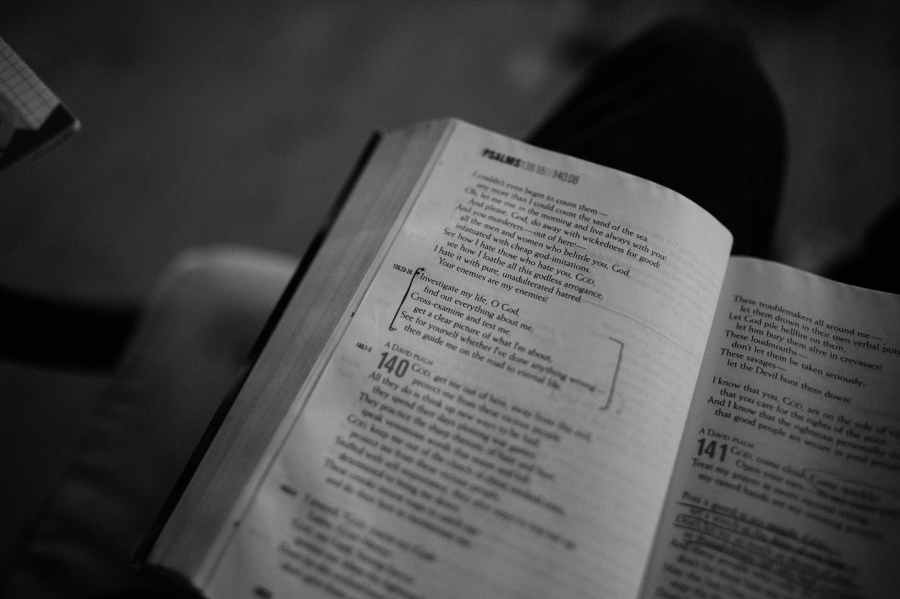
A very dear, dear friend recently checked in to lament the fatigue of Covid and our tribal politics. She was done. Done. The lament of Psalm 13: “How long O Lord?” The psalms are a great tonic any day, but very much so this day. Done.

As the songbook of the Bible, the Psalter is the grammar that forms our faithful speech for worship and prayer which then sets the pattern for how we interact with all of life. Calvin, as he so often does, said it best: “Moreover although The Psalms are replete with all the precepts which serve to frame our life to every part of holiness, piety, and righteousness, yet they will principally teach and train us to bear the cross; and the bearing of the cross is a genuine proof of our obedience, since by doing this, we renounce the guidance of our own affections and submit ourselves entirely to God, leaving him to govern us, and to dispose of our life according to his will, so that the afflictions which are the bitterest and most severe to our nature, become sweet to us, because they proceed from him.” (from John Calvin, “Commentary on Psalms – Volume 1). Indeed.

A couple of years ago, my pastor was preaching through the Psalter, teaching and leading the congregation into a deeper, transformative experience with God’s prayer book. He sought out stories from his flock to bring understanding and tangibility to words that might seem distant and abstract. I was one he asked to reflect upon Psalm 30 and I thought that I would share those comments with you in prayerful hope that if you are also “done,” you may turn to the psalms for the renewal and the hope that lays within.

~

Psalm 30

A psalm. A song for the temple dedication. Of David.

I exalt you, Lord, because you pulled me up; you didn’t let my enemies celebrate over me. Lord, my God, I cried out to you for help, and you healed me. Lord, you brought me up from the grave, brought me back to life from among those going down to the pit.

You who are faithful to the Lord, sing praises to him; give thanks to his holy name! His anger lasts for only a second, but his favor lasts a lifetime. Weeping may stay all night, but by morning, joy!

When I was comfortable, I said, “I will never stumble.”  Because it pleased you, Lord, you made me a strong mountain.

But then you hid your presence. I was terrified. I cried out to you, Lord. I begged my Lord for mercy: “What is to be gained by my spilled blood, by my going down into the pit? Does dust thank you? Does it proclaim your faithfulness? Lord, listen and have mercy on me! Lord, be my helper!”

You changed my mourning into dancing. You took off my funeral clothes         and dressed me up in joy so that my whole being might sing praises to you and never stop. Lord, my God, I will give thanks to you forever.

~

“This morning I can stand here and sincerely proclaim these verses from the 30th psalm:

I exalt you, Lord, because you pulled me up; you didn’t let my enemies celebrate over me. Lord, my God, I cried out to you for help, and you healed me. Lord, you brought me up from the grave, brought me back to life from among those going down to the pit.

That has not always been the case. As a young lad of nine, I remember being mesmerized by the preaching of Rev. Dick Morledge, Senior Pastor of the 1st Presbyterian Church of Bakerstown, Pennsylvania and I found myself thinking – that’s what I want to do: it’s where I want to stand. Roughly ten years later during my junior year at NYU, my father was passing through the city on his way to business in some far eastern destination and we had the chance to grab a steak in the Oak Room Bar at the Plaza Hotel. Our conversation danced around lots of things (I hadn’t been home in almost a year), but at one point he kept saying I belonged in ministry, meaning the pulpit. Instead, in the words of one my favorite modern psalmists, Joni Mitchell, I chose to go chasing after golden Reggie with the apple of temptation and a diamond snake wrapped around my arm.

When I was comfortable, I said, “I will never stumble.” And when you fast forward 20+ years from that dinner, I was indeed standing very comfortably, but not on a strong mountain built by the Lord. It was on a mountain of self-righteousness, greed and pride: a mountain of quicksand.

But then you hid your presence. I was terrified. The sands of that mountain began to crumble and wash away with the miscarriage of twins, the death of our daughter Sarah and several more miscarriages. The blessing of Skylar was followed by another miscarriage and then the miscarriage of career judgment and the miscarriage of my soul. I didn’t simply stumble: it was a full-fledged face plant onto the sidewalk of hell. The Lord finally got the attention of this thick headed Swede via the Honorable DeBevoise.

I cried out to you, Lord. I begged my Lord for mercy:“What is to be gained by my spilled blood, by my going down into the pit? I cried out –  turning to the psalms in particular for words in prayer that I could not form. From Psalm 3: “Lord I have so many enemies” to Psalm 13, “How long will you forget me Lord” to Psalm 23 and Psalm 46’s sense of presence and reassurance; to Psalm 64’s call for the destruction of those many enemies. I prayed the psalms of lament and despair – 17, 28, 31, 59, 61, 77, 102 as well as Psalms 25, 86, 119 and 123, asking for guidance and instruction. In Psalms 62, and the psalms of ascents, I prayed for a desire to trust the Lord more. And I prayed for restoration in Psalms 85, 106, 107 and 137. I prayed as our psalmist does this morning: “Lord listen and have mercy on me! Lord be my helper”

And he did – His anger lasts for only a second, but his favor lasts a lifetime. Weeping may stay all night, but by morning, joy! Our Lord God answered those prayers sending Beth and Skylar and I many angels – several saints individually from this church and all of you sitting here this morning, as well as many who are no longer with us. Our chapter of the body of Christ reached out and because it pleased you, Lord, you made me a strong mountain. His sheepdogs – you know those two from Psalm 23  – goodness and mercy – nipped at my heels hard enough to get me to turn around and gave me a second chance to listen to the voice that has been calling me for more than 50 years.

I have been restored and now stand on a strong mountain. I have been restored to community and restored in my soul; called now to seminary and a life of witness to God’s great mercy and power. I was given the chance to taste and see God’s bounty: blessings that money and materiality will never accomplish. They are blessings that are true and available to all that call his name. They are blessings that we share with our community at large when we go out from here and be the light in everything we say, in everything we do and in everything that we are. Love is not a program and it is not a duty: it is the food and drink of resurrection people and as resurrection people, when we share that food with all we meet, great things happen. As someone that has been fed in this way, I can testify as our psalmist does –   You have changed my mourning into dancing; you took off my funeral clothes and dressed me up in joy so that my soul may praise you and not be silent.  O Lord my God, I will give thanks to you forever. You who are faithful to the Lord sing praises to him and give thanks to his holy name.

Done. Amen.

“Whenever the Psalter is abandoned, an incomparable treasure is lost for the Christian church. With its recovery will come unexpected power –

Dietrich Bonhoeffer