I, I’m a new day rising // I’m a brand new sky // To hang the stars upon tonight // I am a little divided// Do I stay or run away// And leave it all behind? // It’s times like these you learn to live again// It’s times like these you give and give again // It’s times like these you learn to love again// It’s times like these time and time again.
Times Like These, Foo Fighters, (songwriters: Nate Mendel, Dave Grohl, Taylor Hawkins, Chris Shiflett), 2002.
Times like these. Indeed. I recently came across some notes from a series of lectures on the Babylonian exile and in them, Edwin Muir’s poem, One Foot in Eden (1956). It had been a while since I last read it and as I did so again, I found it striking many chords.
One foot in Eden still, I stand
And look across the other land.
The world's great day is growing late,
Yet strange these fields that we have planted
So long with crops of love and hate.
Time's handiworks by time are haunted,
And nothing now can separate
The corn and tares compactly grown.
The armorial weed in stillness bound
About the stalk; these are our own.
Evil and good stand thick around
In fields of charity and sin
Where we shall lead our harvest in.

Yet still from Eden springs the root
As clean as on the starting day.
Time takes the foliage and the fruit
And burns the archetypal leaf
To shapes of terror and of grief
Scattered along the winter way.
But famished field and blackened tree
Bear flowers in Eden never known.
Blossoms of grief and charity
Bloom in these darkened fields alone.
What had Eden ever to say
Of hope and faith and pity and love
Until was buried all its day
And memory found its treasure trove?
Strange blessings never in Paradise
Fall from these beclouded skies.
One Foot in Eden, Edwin Muir, 1956
I have written many times about the darkness that envelopes our lives – racism, violence, feckless politicians, ravaging unemployment and rising food insecurities paint a picture of bleakness and despair that we may be hard stretched to find a comparative experience.
And equally hard stretched to deal with.
It’s what makes me appreciate the story of the Babylonian exile all the more. You can get a good idea of it’s devastation in the book of Lamentations where you will read some of the most brutal and compelling writing about human pain and suffering that emerged from the ashes and ruins of Jerusalem. The psalms are no slouch in this department either. Daughter Babylon, you destroyer, a blessing on the one who pays you back the very deed you did to us! A blessing on the one who seizes your children and smashes them against the rock! (Psalm137.8-9). That is deep anger born of a cavernous despair.
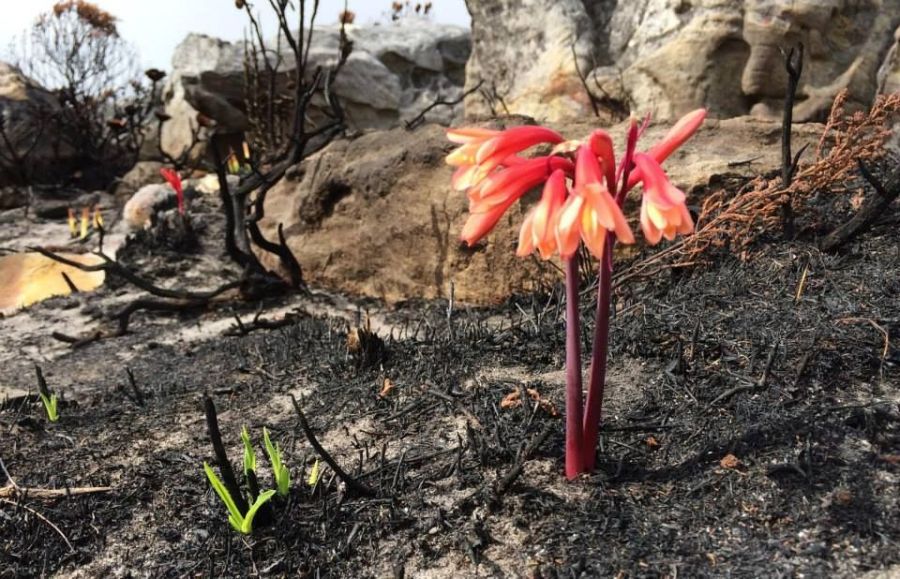
Israel’s story became especially poignant as I read through the horrors of the darkness and despair of the exile only to see hope and faith spring out of the ashes of destruction. If there was ever a time for Israel to not hope, it had to be then. Yet, the exiles did return and laid the foundation for a new temple and renewed life. The flowers of hope and faith, like the fire poppies that spring up after a wild fire, blossomed in dark valleys and burned fields.
As I witness a world that seems to be falling apart in madness with each passing day of violence and ever growing fear mongering, I am reminded by these horrors that we, like Israel, are in exile still, angry and isolated.
But yet, hope blossoms.
From Muir – “One foot in Eden still, I stand // And look across the other land. The world’s great day is growing late // Yet strange these fields that we have planted// So long with crops of love and hate // Time’s handiworks by time are haunted, // And nothing now can separate // The corn and tares compactly grown.”
Crops of love and hate tightly interwoven. Joy and tears coexisting. We have glimpses of how things ought to be only to have to struggle with the way things are. It’s no wonder that our feet stumble and slip.
But like our returning exiles, we too have seen the foundation of the new temple laid. Unlike the exiles though, our foundation is built in, on, and with material against which the gates of hell cannot prevail – Jesus Christ. Muir speaks to our hope in Christ, of the now but not yet: “But famished field and blackened tree //Bear flowers in Eden never known.// Blossoms of grief and charity // Bloom in these darkened fields alone.// What had Eden ever to say // Of hope and faith and pity and love // Until was buried all its day// And memory found its treasure trove? // Strange blessings never in Paradise// Fall from these beclouded skies.”
As Easter people, we stand with one foot in Eden: the dawning kingdom of God. We are filled with enduring hope for the return of the greatest gift that ever was. We stand and blossom, fed and supported by our faith in that hope. Strange blessings? Perhaps. But blessings that call for singing a new song.
I waited patiently for the Lord // He inclined and heard my cry// He brought me up out of the pit // Out of the mire and clay// I will sing, sing a new song // I will sing, sing a new song // How long to sing this song // How long to sing this song // How long, how long, how long // How long, to sing this song// He set my feet upon a rock // And made my footsteps firm // Many will see // Many will see and fear // I will sing, sing a new song // I will sing, sing a new song.
40, U2 (songwriters: Adam Clayton, David Evans, Laurence Mullen, Paul David Hewson), 1983
 A Prodigal's Periodical