“The world that we all knew before, could wake up in feeling safe... now it seems that everything has been turned upside down.” Tori Amos
Upside down indeed! An unknown virus goes around the world faster than Phileas Fogg and Passepartout, murdering hundreds of thousands and devastating national economies, creating further madness and mayhem for those still living. Dreams are shattered, lives are placed on indefinite hold by an unseen, capricious, biological mutation arbitrarily making the difference between life and death. We define ourselves by our careers and the virus has created an existential crisis of identity made more acute by our very real physical isolation. It is not surprising to see the selfishness of the “I, Me, Mine” culture we inhabit on vivid display. As David Brooks has noted, we are a “morally inarticulate culture,”[1] adrift at the very time when the most fundamental moral questions should be front and center.
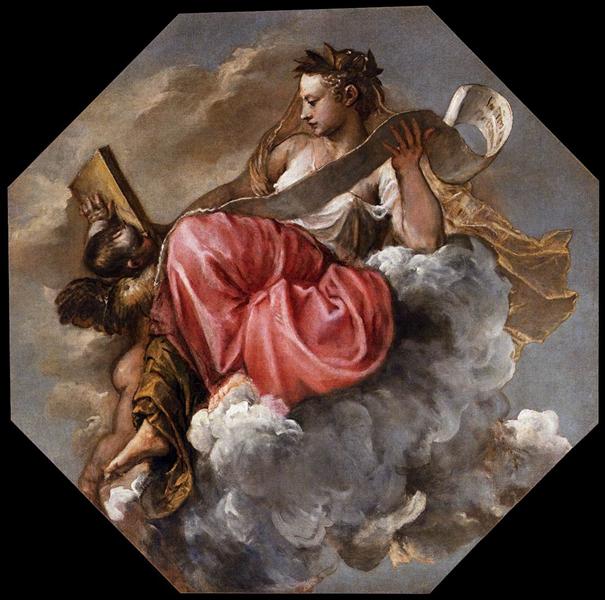
Wisdom cries out in the street; in the squares she raises her voice. At the busiest corner she cries out; at the entrance of the city gates she speaks: ‘How long, O simple ones, will you love being simple? How long will scoffers delight in their scoffing and fools hate knowledge? (Proverbs 1.20-22, NRSV).
Listening to Lady Wisdom has never been more important as now.
I savor the book of Proverbs: a poetic compilation of the roadmap to how God has designed the world to work. The proverbs of “Solomon son of David, king of Israel” illuminates the ways of godly living and the means by which to reflect kingdom work and God’s glory in the details of life and relationships. They are ancient anchors of wisdom that keep us steady and focused on Christ during times of transition and uncertainty: a crucial distinction between reading Proverbs for advice and going to it for wisdom.[2] And, in today’s upside down climate, it is a distinction that is all the more compelling.
As a young father, I used to bristle at Proverbs that appeared to condone corporal punishment: “Those who spare the rod hate their children, but those who love them are diligent to discipline them’(13.24, NRSV); and “Do not withhold discipline from your children; if you beat them with a rod, they will not die. If you beat them with the rod, you will save their lives from Sheol”(23.13-14, NRSV). Sounds like a good way to get arrested today. However, what I have since learned, is that the sages of Proverbs had a more nuanced idea about discipline. In the second verse of the book’s opening act, the Hebrew word, mûsar, (which many translate as “instruction”), is better translated as “discipline.” The noted theologian Ellen Davis writes that mûsar “…always denotes authoritative instruction or correction from God or God’s agent, personified Wisdom, or from a teacher or a parent.”[3] Discipline, in this sense, should be seen in the positive context of setting boundaries; a prescriptive hermeneutical lens of instruction for how to live life, rather than to describe how life is: an understanding of discipline that is well captured by a verse from the Thomas Troeger hymn, “God Marked a Line and Told the Sea.” From verse 5: “We are not free when we’re confined//to every wish that sweeps the mind, //but free when freely we accept//the sacred bounds that must be kept.” [4] As I look at my flourishing twenty-one year old daughter, I can clearly see the living results.
Discipline and boundaries driven by sacred love is a wise teaching indeed, especially for a society that is captivated by every individualistic wish and whim: a society deeply polarized by those whims. “The one who lives alone is self-indulgent, showing contempt for all who have sound judgement. A fool takes no pleasure in understanding, but only in expressing personal opinion” (18.1-2). The Hebrew translated as “lives alone” literally means to separate oneself: it is an ‘us versus them’ way of life that has become our cultural norm, constituting a very positive danger that rejects the importance and value of community. The price of abandoning community is more than personal isolation or lack of fulfillment: it is anarchy, personal chaos and too often, open and frequently violent hostility toward others. Nowhere is this more clearly on display than with the “my body, my freedom” assertion against the wearing of masks in our struggle to combat the horror of Covid-19.
As we continue to face the bitter divisiveness and uncertainties of our time, the sages offer a way forward, urging us to dive deeply into our faith, an immersion that leads to an internal disposition of stability: “No one finds security by wickedness, but the root of the righteous will never be moved…The wicked covet the proceeds of wickedness, but the root of the righteous bears fruit” (12.3, 12). This is not merely psychological stability, but something deeper than any psychologist could validate. The root of the righteous will never be moved because the righteous are rooted in God: “…their delight is in the law of the Lord, and on his law they meditate day and night. They are like trees planted by streams of water, which yield their fruit in its season, and their leaves do not wither. In all that they do, they prosper” (Psalm 1.2-3, NRSV). This is stability that stands at the foot of the cross and laments with a God that knows our pain and weeps with us. It is a stability whose foundation is predicated on the knowledge that God is not elsewhere and confers the hope to accept the present situation, with all of its limitations as providing all the necessary conditions for faithful living: to ask what, not why; to ask how, and for whom.
“The root of the righteous bears fruit.” Thomas Aquinas echoed this proverb when he taught that justice is the responsibility that we owe one another as fellow creatures of the One God. Yet, too frequently, we fail to act justly toward others and in the process, we do not do the kingdom work Christ calls us to do. So many of our acts of injustice (economic and personal) stem from a vain pursuit of our “real self” which more money, a more exciting marriage, more prestigious friends and another shopping spree will surely enable us to find and let Covid-19 take the hindmost. We should be fixed, not in that which is blown like chaff in the wind, but in the rootedness of God: “My heart is steadfast, O God, my heart is steadfast. I will sing and make melody” (Psalm 57.7, NRSV). As we move forward, we need to rethink our understanding of the kind of knowledge that comprises wisdom to include an awareness of the political and scientific realities of our world and the necessary responses that promote justice in the social arena. I’ll let Jesus have the last word. “But to what will I compare this generation? It is like children sitting in the market-places and calling to one another, “We played the flute for you, and you did not dance; we wailed, and you did not mourn”… Yet wisdom is vindicated by her deeds’ (Matthew 11.16-17,19b).
[1] David Brooks, “Opinion | The Moral Meaning of the Plague,” The New York Times, March 26, 2020, sec. Opinion, https://www.nytimes.com/2020/03/26/opinion/coronavirus-meaning.html.
[2] John 1.1-3 is a clear echo of Proverbs 8.22-32. Paul picks up on this theme in his letter to the church in Corinth: “For Jews demand signs and Greeks desire wisdom, but we proclaim Christ crucified, a stumbling-block to Jews and foolishness to Gentiles, but to those who are the called, both Jews and Greeks, Christ the power of God and the wisdom of God” (1 Corinthians 1.22-24, NRSV).
[3] Ellen F. Davis, Proverbs, Ecclesiastes, and the Song of Songs, 1st ed, Westminster Bible Companion (Louisville, Ky: Westminster John Knox Press, 2000), 25.
[4] God Marked a Line and Told the Sea, by Thomas Troeger as found in Lift up Your Hearts: Psalms, Hymns, and Spiritual Songs (Grand Rapids, Mich.: Faith Alive Christian Resources, 2013), Hymn #28, verse 5.
 A Prodigal's Periodical
Afternoon P-KEM,
Very insightful and well-written, as always!! Thanks!
LikeLike