1When Israel went out from Egypt, the house of Jacob from a people of strange language, 2Judah became God’s sanctuary, Israel his dominion. 3The sea looked and fled; Jordan turned back. 4The mountains skipped like rams, the hills like lambs. 5Why is it, O sea, that you flee? O Jordan, that you turn back? 6O mountains, that you skip like rams? O hills, like lambs? 7Tremble, O earth, at the presence of the Lord, at the presence of the God of Jacob, 8who turns the rock into a pool of water, the flint into a spring of water. (NRSV)
God holds nothing back when God wants to do something significant for us. No mountain, no barrier, no human can get in the way of God’s plans for you, just as nothing was able to get in the way of delivering God’s people from Egypt.
I call them holy happenings. God involves people in their unfolding, but God is in control and cannot be stopped. God can do it anytime, anywhere and in any place: from safe passage through the Red Sea, to the resurrection of Jesus, the conversion of Paul and the visions of John. Holy happenings are beyond human comprehension, definition, and explanation.
Recognizing holy happenings requires a sense of awe and wonder, and the eyesight of faith. Real power is unseen. The real power of a home depends on love and respect, not the size of the house. The real power of electricity is in the current, not the cable. So it is with God.
The power of God is not experienced face-to-face, but through God’s many manifestations in the world. Accept the mystery; don’t let fear or doubt settle in your mind and get in the way. God produces holy happenings to reassure us of God’s presence, power and love, not to terrify us. Remember, Scripture shows that peace always comes out of confusion.
Holy happenings change history. Holy happenings change the world. A holy happening could change your life, so look around. There are holy happenings in your life right now: family gathered around the dinner table; staycations and more time at home being a neighbor with those you might have never met otherwise; being free to teach your child how to ride a bike; learning to bake bread; savoring the scent of honeysuckle on a summer morning; doing the evening dishes with your spouse. Look around, inhale the beauty of God’s good creation: you have the time. The mountains and hills could be skipping like rams and lambs.
Life was so beautiful // Then we all got locked down// Feel a like ghost // Living in a ghost town.. yeah…I'm a ghost// Living in a ghost town // I'm going nowhere //
 Shut up all alone// So much time to lose // Just staring at my phone...
Mick Jagger and Keith Richards, "Living in a Ghost Town," Polydor, 2020
It does feel like a ghostly time. While some ‘normalcy’ to life has returned to my part of the country for now, much of life yet remains in a weird fog of uncertainty made all the more so by the made for TV fascism produced by the apprentice of the Oval Office. It’s an atmosphere that makes you wonder what really matters anymore. It is an ambience well captured by my one of my favorite Hebrew words: hevel. It means breath, vapor, fog, a fleeting ephemerality, the notion of a transitory existence. A ghost. It is the root for the name Able, a man of transitory existence par excellence. I have often likened hevel to be something akin to nailing jello to a tree and in these times, trying to grab hold of the touchstones that gave our lives a sense of stability and direction too often feels like an exercise in that kind of futility. Hevel – vanity, one of the central threads woven throughout the book we know as Ecclesiastes. Hevel – the word appears 38 times, beginning in verse 2: hevel hakkōl hevelim – vanity of vanities.
I do not like the Latin transliteration of the Greek translation of the Hebrew title, Koheleth. In Greek, Ekklēsiastḗs, means ‘of an assembly’ or ‘one who calls an assembly,’ perhaps a preacher. It’s a title that I think obfuscates. The Hebrew title of the book, as with all Hebrew names for the books of the Bible, comes from the first verse: “The words of the Teacher,” Koheleth. It is plain to see what things are all about for that which follows: the words of a teacher who has much to teach us. Koheleth.
While Proverbs presumes the existence of a moral order instilled and maintained by the divine creator that purports wisdom’s function was to ensure success, and long, prosperous lives surrounded by our children and admiring friends, Koheleth paints quite a different and humbling picture more akin to the realities of a broken world: a book that at its core, teaches humility.
If you haven’t yet, or perhaps haven’t in a while, there is no better time like now to dive into this selection from the wisdom literature of the Bible. Martin Luther felt that Koheleth should be read daily by Christians and it was, according to a Vietnam war chaplain, a book that the soldiers welcomed hearing from most often. I have heard others liken reading Koheleth to slipping into a warm bath. Interesting comparison. In this post, I would like to share some of my thoughts about slipping into this warm bath from the word of God.
Koheleth doesn’t ‘speak into my life’ as much as it speaks about my life. It is a beautifully crafted, artistic reflection and interpretation of life that experience has shown to be compelling and persuasive. The Teacher writes in a manner that that imitates life itself, posing life’s perplexing questions and meaning without giving a direct answer: “For who knows what is good for mortals while they live the few days of their vain life, which they pass like a shadow? For who can tell them what will be after them under the sun? (6.12). We can speak of the mundane clearly enough, but ultimate truth is the slippery eel that escapes our mortal limits of understanding if we are humble enough to admit it.
The obsession with materiality that devours so many lives, my own past included, is on point, especially the futility of it: “What do people gain from all the toil at which they toil under the sun?” (1.3). As a teenager, I heard a call from God to the pastorate that I diligently ignored for the better part of forty-five years, chasing the almighty dollar with great ‘success’ as an investment broker. That is if you measure success by your bank account balance and the size of your home. I was one of those that indulged in the ‘total work’ culture we inhabit, valuing myself by the ninety hour plus weeks that I put in, blind to the beauty and joy found in the gifts of my wife and daughter. What I discovered in the humiliating process of losing money, house, cars, fancy suits and temporarily, my freedom, was that none of it had mattered in the first place: “Then I saw that all toil and all skill in work come from one person’s envy of another. This also is vanity and a chasing after wind” (4.4). Hevel indeed.
In the process, I came to grips with Koheleth’s observation to not romanticize the past: “Do not say, ‘Why were the former days better than these?’ For it is not from wisdom that you ask this” (7.10) The nostalgic valuation of the past negates any possibility of present joy and less obviously, dismisses present responsibilities. It is conceivably easy to look back and relish the six-bedroom home over against the small apartment we now occupy, but to do so would be to forget that our current home was a gift from God at a time of imminent homelessness: a negligence which could readily contribute to reestablishing the mindset that created the problems in the first place – ignoring the Lord’s call and presence in my life while chasing the hevel of materiality. Hevel hakkōl hevelim – vanity of vanities.
Where Koheleth speaks most profoundly for me is with our fleeting lifespans. As I pass my ‘best used by date,’ I clearly understand how quickly time passes and that every moment is to be savored. In verse 9.4 we read: “But whoever is joined with all the living has hope, for a living dog is better than a dead lion.” The only ‘security’ ; a better translation than ‘hope,’ anchors the living with the knowledge that we all die. It is a sobering thought, but an essential one, as it is far too easy to be caught up chasing after the wind of excess materiality or deep depression. Koheleth exhorts:
“Go, eat your bread with enjoyment, and drink your wine with a merry heart; for God has long ago approved what you do. Let your garments always be white; do not let oil be lacking on your head. Enjoy life with the wife whom you love, all the days of your vain life that are given you under the sun, because that is your portion in life and in your toil at which you toil under the sun. Whatever your hand finds to do, do with your might; for there is no work or thought or knowledge or wisdom in Sheol, to which you are going because that is your portion in life and in your toil at which you toil under the sun” (9.7-10).
Given the fleetingness of my ‘hevel’ life, this serves as a reminder to enjoy the gifts of God that matter. The ups and downs, the good, the bad and the ugly, find their ways into everyone’s life at some point or another. Adhering to the commands of God is the only intelligent and faithful response to the essential fact that ‘all is hevel’.
In many ways, my favorite poet from the tidewater of Virginia captured my experience with the words of the Teacher:
“When I was younger I saw things in black and white, // Now all I see is a sad, hazy gray. Sometimes I see a narrow flash of light, // Sometimes I look and you show me the way. No matter what else happens, //What the future will be, in a world so uncertain, // Through the clouds it’s hard to see. I will grab you and carry you, // Calm your fears if you’re afraid, We’ll go walking, // Across the fields of gray.” (Bruce Hornsby, Fields of Gray, Harbor Lights, RCA, 1993.)
In the fields and times of the gray of life, Koheleth is truly a jewel of revelation to keep to the course of our faith: “The end of the matter; all has been heard. Fear God, and keep his commandments; for that is the whole duty of everyone. For God will bring every deed into judgement, including every secret thing, whether good or evil” (12.12-14). Focus, the Teacher implores, on the constancy of the promise of God in Christ as a lamp unto my feet. Light that shines in the darkness of hevel and the darkness cannot, and will not, ever overcome it.
“The world that we all knew before, could wake up in feeling safe... now it seems that everything has been turned upside down.” Tori Amos
Upside down indeed! An unknown virus goes around the world faster than Phileas Fogg and Passepartout, murdering hundreds of thousands and devastating national economies, creating further madness and mayhem for those still living. Dreams are shattered, lives are placed on indefinite hold by an unseen, capricious, biological mutation arbitrarily making the difference between life and death. We define ourselves by our careers and the virus has created an existential crisis of identity made more acute by our very real physical isolation. It is not surprising to see the selfishness of the “I, Me, Mine” culture we inhabit on vivid display. As David Brooks has noted, we are a “morally inarticulate culture,”[1] adrift at the very time when the most fundamental moral questions should be front and center.
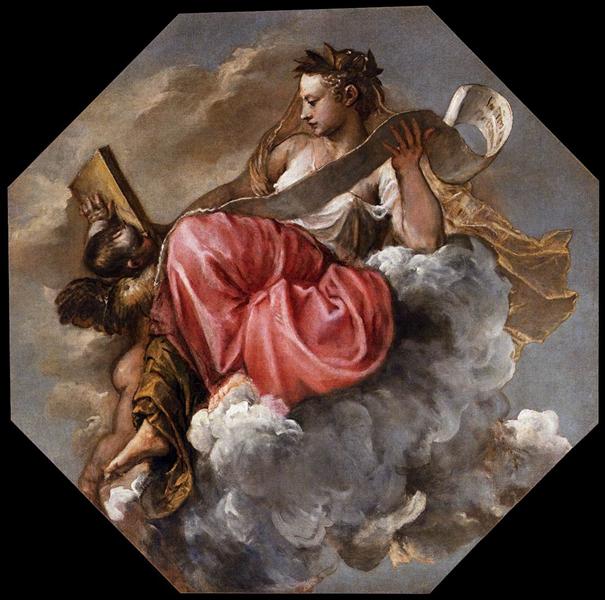
Wisdom cries out in the street; in the squares she raises her voice. At the busiest corner she cries out; at the entrance of the city gates she speaks: ‘How long, O simple ones, will you love being simple? How long will scoffers delight in their scoffing and fools hate knowledge? (Proverbs 1.20-22, NRSV).
Listening to Lady Wisdom has never been more important as now.
I savor the book of Proverbs: a poetic compilation of the roadmap to how God has designed the world to work. The proverbs of “Solomon son of David, king of Israel” illuminates the ways of godly living and the means by which to reflect kingdom work and God’s glory in the details of life and relationships. They are ancient anchors of wisdom that keep us steady and focused on Christ during times of transition and uncertainty: a crucial distinction between reading Proverbs for advice and going to it for wisdom.[2] And, in today’s upside down climate, it is a distinction that is all the more compelling.
As a young father, I used to bristle at Proverbs that appeared to condone corporal punishment: “Those who spare the rod hate their children, but those who love them are diligent to discipline them’(13.24, NRSV); and “Do not withhold discipline from your children; if you beat them with a rod, they will not die. If you beat them with the rod, you will save their lives from Sheol”(23.13-14, NRSV). Sounds like a good way to get arrested today. However, what I have since learned, is that the sages of Proverbs had a more nuanced idea about discipline. In the second verse of the book’s opening act, the Hebrew word, mûsar, (which many translate as “instruction”), is better translated as “discipline.” The noted theologian Ellen Davis writes that mûsar “…always denotes authoritative instruction or correction from God or God’s agent, personified Wisdom, or from a teacher or a parent.”[3] Discipline, in this sense, should be seen in the positive context of setting boundaries; a prescriptive hermeneutical lens of instruction for how to live life, rather than to describe how life is: an understanding of discipline that is well captured by a verse from the Thomas Troeger hymn, “God Marked a Line and Told the Sea.” From verse 5: “We are not free when we’re confined//to every wish that sweeps the mind, //but free when freely we accept//the sacred bounds that must be kept.”[4] As I look at my flourishing twenty-one year old daughter, I can clearly see the living results.
Discipline and boundaries driven by sacred love is a wise teaching indeed, especially for a society that is captivated by every individualistic wish and whim: a society deeply polarized by those whims. “The one who lives alone is self-indulgent, showing contempt for all who have sound judgement. A fool takes no pleasure in understanding, but only in expressing personal opinion” (18.1-2). The Hebrew translated as “lives alone” literally means to separate oneself: it is an ‘us versus them’ way of life that has become our cultural norm, constituting a very positive danger that rejects the importance and value of community. The price of abandoning community is more than personal isolation or lack of fulfillment: it is anarchy, personal chaos and too often, open and frequently violent hostility toward others. Nowhere is this more clearly on display than with the “my body, my freedom” assertion against the wearing of masks in our struggle to combat the horror of Covid-19.
As we continue to face the bitter divisiveness and uncertainties of our time, the sages offer a way forward, urging us to dive deeply into our faith, an immersion that leads to an internal disposition of stability: “No one finds security by wickedness, but the root of the righteous will never be moved…The wicked covet the proceeds of wickedness, but the root of the righteous bears fruit” (12.3, 12). This is not merely psychological stability, but something deeper than any psychologist could validate. The root of the righteous will never be moved because the righteous are rooted in God: “…their delight is in the law of the Lord, and on his law they meditate day and night. They are like trees planted by streams of water, which yield their fruit in its season, and their leaves do not wither. In all that they do, they prosper” (Psalm 1.2-3, NRSV). This is stability that stands at the foot of the cross and laments with a God that knows our pain and weeps with us. It is a stability whose foundation is predicated on the knowledge that God is not elsewhere and confers the hope to accept the present situation, with all of its limitations as providing all the necessary conditions for faithful living: to ask what, not why; to ask how, and for whom.
“The root of the righteous bears fruit.” Thomas Aquinas echoed this proverb when he taught that justice is the responsibility that we owe one another as fellow creatures of the One God. Yet, too frequently, we fail to act justly toward others and in the process, we do not do the kingdom work Christ calls us to do. So many of our acts of injustice (economic and personal) stem from a vain pursuit of our “real self” which more money, a more exciting marriage, more prestigious friends and another shopping spree will surely enable us to find and let Covid-19 take the hindmost. We should be fixed, not in that which is blown like chaff in the wind, but in the rootedness of God: “My heart is steadfast, O God, my heart is steadfast. I will sing and make melody” (Psalm 57.7, NRSV). As we move forward, we need to rethink our understanding of the kind of knowledge that comprises wisdom to include an awareness of the political and scientific realities of our world and the necessary responses that promote justice in the social arena. I’ll let Jesus have the last word. “But to what will I compare this generation? It is like children sitting in the market-places and calling to one another, “We played the flute for you, and you did not dance; we wailed, and you did not mourn”… Yet wisdom is vindicated by her deeds’ (Matthew 11.16-17,19b).
[2] John 1.1-3 is a clear echo of Proverbs 8.22-32. Paul picks up on this theme in his letter to the church in Corinth: “For Jews demand signs and Greeks desire wisdom, but we proclaim Christ crucified, a stumbling-block to Jews and foolishness to Gentiles, but to those who are the called, both Jews and Greeks, Christ the power of God and the wisdom of God” (1 Corinthians 1.22-24, NRSV).
[3] Ellen F. Davis, Proverbs, Ecclesiastes, and the Song of Songs, 1st ed, Westminster Bible Companion (Louisville, Ky: Westminster John Knox Press, 2000), 25.
[4]God Marked a Line and Told the Sea, by Thomas Troeger as found in Lift up Your Hearts: Psalms, Hymns, and Spiritual Songs (Grand Rapids, Mich.: Faith Alive Christian Resources, 2013), Hymn #28, verse 5.


 A Prodigal's Periodical